Why is Volvo D13 parked regen not working?
A parked regen on a Volvo D13 may not start because one of the regeneration conditions has not been met. Possible reasons are the PTO (Power Take-Off) being switched on, an incorrect status of the transmission or parking brake, accelerator or clutch input, low engine temperature, active DTCs (Diagnostic Trouble Codes), regeneration lockout which is temporary or permanent.
Volvo D13 Parked Regen Not Working: What Does “Regeneration Not Possible” Mean?
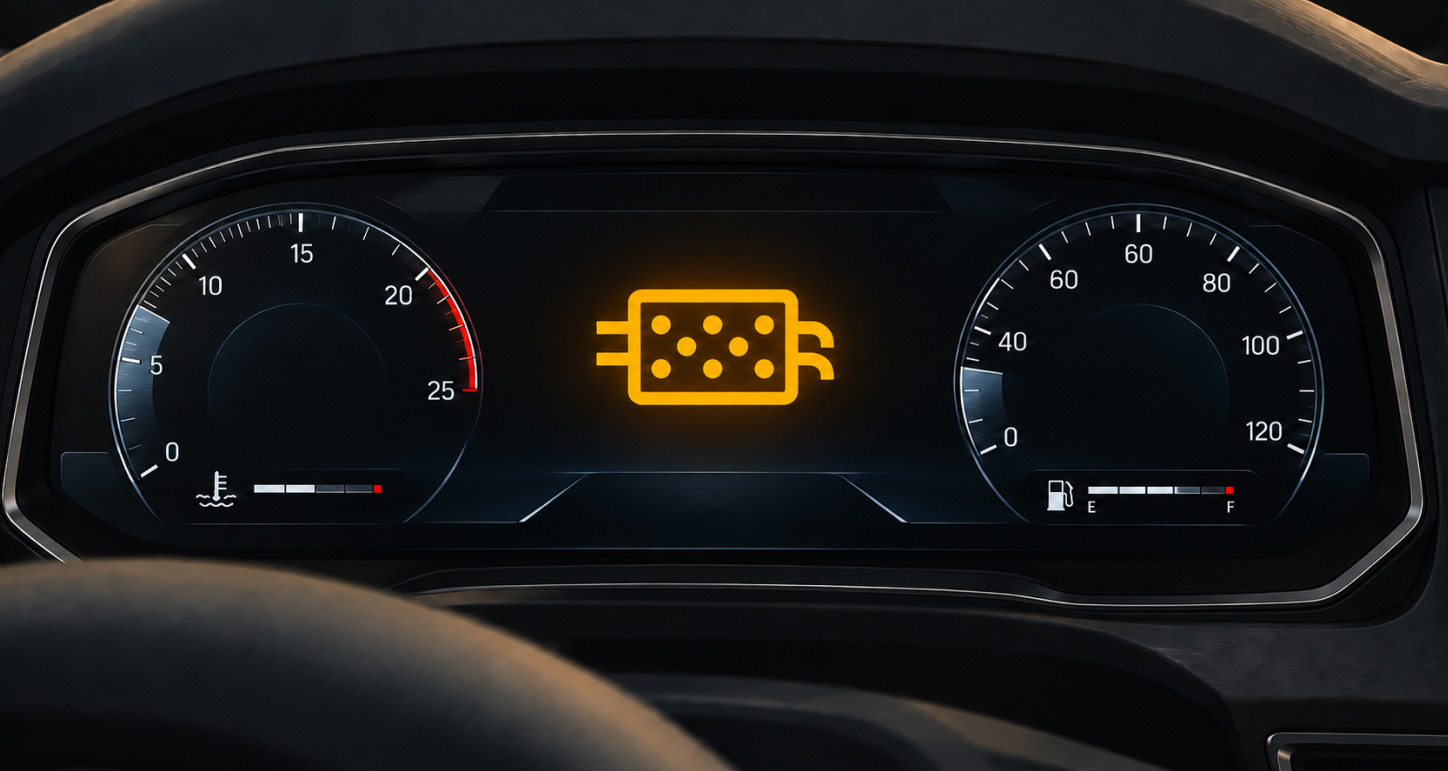 When the truck displays “Regeneration not possible” or “Regen conditions not met,” it does not necessarily mean that the DPF itself has failed or become clogged. The ECM checks multiple operating parameters before it allows a parked regeneration to begin. Should even one of those values be out of the given range, the regeneration request will be denied.
When a Volvo D13 regen not possible condition is detected, the first step should be evaluating the DPF regeneration enable criteria and avoiding an unnecessary component replacement. Here, we are interested in finding the specific criterion that is preventing the ECM from allowing regeneration and finding the reason for determining why that criterion is not satisfied.
In this guide, we'll walk through the complete diagnostic workflow, from basic parked-regen requirements and PTO status to engine temperature, active DTCs, soot load, sensor readings, and temporary or service-level regeneration lockouts.
The most effective diagnostic approach is to move from simple external conditions to electronic inputs, DTCs, soot-load status and finally the aftertreatment hardware.
Step 1: Confirm that regeneration is actually being requested
Before troubleshooting an inhibit condition, verify that the truck actually needs a parked regeneration.
Volvo systems can refuse a manual regeneration when regeneration is not currently required. Older Volvo documentation describes this as a temporary lockout: the system prevents a manual regeneration because the soot level has not reached the threshold at which regeneration is required.
Therefore, check:
DPF soot-load percentage or calculated soot level
regeneration status in the instrument cluster
whether the display says Regeneration Needed
whether the request is a normal parked regen or a service regeneration
whether a previous regeneration has already reduced the soot load
If the soot level is below the regeneration threshold, repeatedly trying to force a parked regen will not solve anything.
Important
“Regeneration not possible” does not automatically mean the DPF is clogged.
A temporary lockout can be completely normal if the calculated soot load is too low. Conversely, a very high soot load can create a permanent or service-level lockout where a normal parked regeneration is no longer permitted.
Step 2: Check the basic parked-regen conditions
This is the first major branch of the diagnostic tree.
The truck should be configured correctly before starting the regeneration:
Condition | Required state |
Vehicle | Stationary |
Transmission | Neutral |
Parking brake | Applied |
Accelerator | Released |
Clutch | Released, where applicable |
PTO | Disabled unless the truck is specifically configured for PTO regeneration |
Engine | Running and warmed up |
Regen inhibit | Not active |
Truck/chassis configuration | All required conditions satisfied |
Volvo's current driver documentation lists disabling the PTO, releasing the accelerator, selecting neutral, parking the vehicle, applying the parking brake, releasing the clutch and warming the engine as conditions for starting active regeneration.
Older D13 aftertreatment documentation similarly identifies neutral transmission, parking brake, released accelerator and clutch, coolant temperature above 95°F (35°C), absence of blocking component faults and adequate battery voltage as parked-regeneration requirements.
Do not assume that a physical control position is enough. The ECM needs to see the correct electronic status.
For example, the parking brake may be physically applied while the brake-status signal remains incorrect because of a switch, sensor, wiring or communication problem.
Step 3: Check PTO status
PTO is one of the most common reasons a Volvo parked regen may not work on vocational trucks.
A conventional parked regeneration generally requires the PTO to be inactive. Volvo's current Driver Guide explicitly lists Disable PTO as one of the conditions for starting regeneration.
However, this is an important exception: certain Volvo configurations can support regeneration while the PTO is engaged.
Volvo documentation explains that PTO regeneration requires the truck to be configured correctly, including the appropriate PTO electrical interface and engine-speed control. If the PTO configuration cannot maintain the required engine speed, regeneration will not occur.
Therefore:
PTO active → do not automatically conclude that the system is faulty.
First determine whether that particular D13/chassis configuration supports regeneration in PTO mode.
The accelerator pedal must normally remain completely released during parked regeneration.
This is where live data becomes extremely useful.
A pedal can be physically untouched while the ECM still sees a non-zero accelerator position because of:
accelerator-pedal sensor problems
incorrect programming
wiring faults
connector corrosion
implausible dual-channel pedal readings
CAN communication problems
If the regeneration criteria screen shows the accelerator condition as CHECK, compare the displayed accelerator percentage with the actual pedal position.
The same principle applies to the clutch and brake inputs. Volvo systems use these signals to determine whether the vehicle remains in the required stationary state.
Did You Know?
A regeneration can be blocked by an incorrect electronic input even when the mechanical component appears to work normally.
For example, a parking brake can hold the truck securely while the ECM still receives a “parking brake released” signal. The ECM determines that the regeneration conditions have not been met.
Step 5: Verify transmission neutral and vehicle speed
The transmission must report the correct neutral state, and the vehicle must be stationary.
Check both:
the actual selector position;
the value reported to the engine/vehicle control system.
A faulty range sensor, transmission controller problem, CAN communication issue or incorrect selector status can prevent regeneration.
This is especially important when the truck appears to be in neutral but the regeneration criteria still show a transmission-related CHECK.
If available, monitor:
The objective is to determine which input is preventing the ECM from accepting the parked-regen request.
Step 6: Check engine coolant temperature
A cold D13 is another common reason a Volvo regeneration may be impossible.
The engine needs to be sufficiently warm before regeneration can begin. Volvo D13 aftertreatment documentation identifies 35°C (95°F) as a minimum coolant-temperature requirement in the referenced D13 regeneration procedure.
If the engine has been idling for only a short time, do not assume that it is warm enough.
Check the actual coolant-temperature value with diagnostic software.
If the engine reaches operating temperature slowly or never reaches the required temperature, investigate:
thermostat operation
coolant-temperature sensor
wiring/connectors
engine operating temperature
cooling-system problems
incorrect temperature readings
A thermostat problem can be particularly important because the engine may appear to run normally while remaining too cool for the regeneration strategy.
Step 7: Check fuel level and fuel-system conditions
Fuel availability should also be checked before attempting a parked regeneration.
Regeneration requires additional fuel to create the necessary exhaust temperature. Therefore, an extremely low fuel level or a fuel-system problem can prevent the regeneration strategy from operating correctly.
Do not treat a specific fuel percentage as universal for every Volvo D13. The exact threshold can vary with model year, engine mapping and vehicle configuration.
Check:
If the truck has very little fuel, refuel it before continuing with regeneration diagnostics.
Step 8: Check all active DTCs
This is one of the most important steps in the entire workflow.
A parked regeneration may be refused because an active fault indicates that the engine or aftertreatment system cannot safely perform regeneration.
Volvo documentation states that active component faults can prevent parked regeneration.
Do not limit the scan to DPF fault codes.
Check relevant faults in:
ECM
ACM/aftertreatment controller
VECU
transmission controller
exhaust-temperature sensors
differential-pressure sensor
NOx sensors
EGR system
VGT/turbocharger system
fuel system
DEF/SCR system
The critical distinction is between a code that merely accompanies the regen problem and a code that actively inhibits regeneration.
A truck can have a DPF-related symptom caused by an upstream engine problem.
For example, excessive soot production from an engine-air/fuel problem can repeatedly load the DPF and eventually create a regeneration problem.
Step 9: Check the DPF soot-load state
Next, determine where the truck sits on the soot-load scale.
There are three fundamentally different situations.
Soot load too low
The system may temporarily lock out manual regeneration because regeneration is not required.
This is a temporary lockout, not necessarily a malfunction. Volvo documentation describes temporary lockout as preventing regeneration when the system determines that regeneration is not needed.
Soot load within the regeneration range
A parked regeneration should normally be available if all other conditions are satisfied.
If it is still refused, concentrate on:
Soot load too high
This is more serious.
At excessive soot loading, the ECM may prevent a normal parked regeneration and require a service regeneration or DPF service instead.
One Volvo D13 service document describes parked regeneration as being permitted only up to a specified soot-load limit, with progressively increasing derate as soot loading rises; above the service threshold, a service regeneration using Volvo diagnostic equipment is required. Exact thresholds depend on the engine generation and programming.
Important
Do not repeatedly command parked regeneration on a DPF that has reached a service-level soot load.
At that point the correct diagnostic path is to determine why the soot load became excessive and follow the appropriate service procedure.
Step 10: Check for a temporary or permanent regeneration lockout
If all basic conditions appear correct but the regen still cannot start, determine whether the system reports a lockout.
Temporary lockout
Typical logic:
Regeneration not required → manual regeneration unavailable.
This can occur when the calculated soot load is below the required threshold.
The quickest and easiest solution is to return the truck to normal operation rather than attempting regeneration.
Did You Know?
Volvo's regeneration system can distinguish between temporary lockout and a condition that requires service. A temporary lockout can occur simply because the soot level is not high enough for regeneration to be required.
That means a driver can see that regeneration is unavailable even though the aftertreatment system is functioning correctly.
Permanent/service lockout
Typical logic:
Condition requires service → normal parked regeneration prohibited.
Possible causes include:
excessive soot loading
active aftertreatment fault
regeneration-system malfunction
sensor plausibility problem
thermal-system problem
DPF condition outside the allowed regeneration range
At this stage, diagnostic software is normally required to determine the exact reason.
Volvo D13 Regen Conditions Not Met: Diagnostic Decision Tree
Use the following sequence when the dashboard displays “Regeneration not possible”:
Regeneration requested
↓
Is regeneration actually required?
↓
Truck stationary?
No → stop vehicle
Yes → continue
↓
Transmission in neutral?
No → select neutral
Yes → continue
↓
Parking brake applied and recognized electronically?
↓
Accelerator released and reading 0%/valid?
↓
Clutch released and recognized?
↓
PTO disabled or configured to regenerate correctly?
↓
Engine sufficiently warm?
↓
Fuel level and fuel system acceptable?
↓
Active DTCs blocking regeneration?
↓
Soot level within permitted regeneration range?
↓
Still no regeneration?
Use diagnostic software to inspect regeneration criteria, sensor values, inhibit status and aftertreatment data.
Step 11: Inspect the temperature and pressure sensors
If every basic criterion is satisfied but the D13 still refuses regeneration, move to sensor data.
Pay particular attention to:
DPF differential pressure
exhaust temperature sensors
DOC/DPF temperature behavior
calculated soot load
exhaust pressure
engine load
fuel dosing status
A faulty differential-pressure sensor can produce an implausible DPF loading calculation.
Temperature sensors are equally important because the ECM needs reliable exhaust-temperature information to control and monitor regeneration.
If sensor readings are implausible before regeneration even begins, repairing the sensor circuit may be necessary before the ECM will allow the regeneration sequence.
Step 12: If regeneration starts but fails, change the diagnostic strategy
There is an important difference between:
“Regeneration not possible”
and
“Regeneration started but failed.”
If the regen never starts, concentrate first on inhibit criteria.
If it starts and then aborts, investigate the system's ability to generate and maintain the required exhaust temperature.
Potential causes include:
exhaust leaks
temperature-sensor problems
fuel-dosing problems
DOC performance problems
Hydrocarbon (HC) doser/Aftertreatment Fuel Injector (AFI) problems where equipped
excessive exhaust heat loss
low engine load
turbocharger/VGT problems
excessive DPF restriction
incorrect differential-pressure readings
Volvo documentation notes that low exhaust temperature and degraded AFI/DOC performance can cause regeneration failures even when a parked regeneration can otherwise be initiated.
What Diagnostic Software Should Show
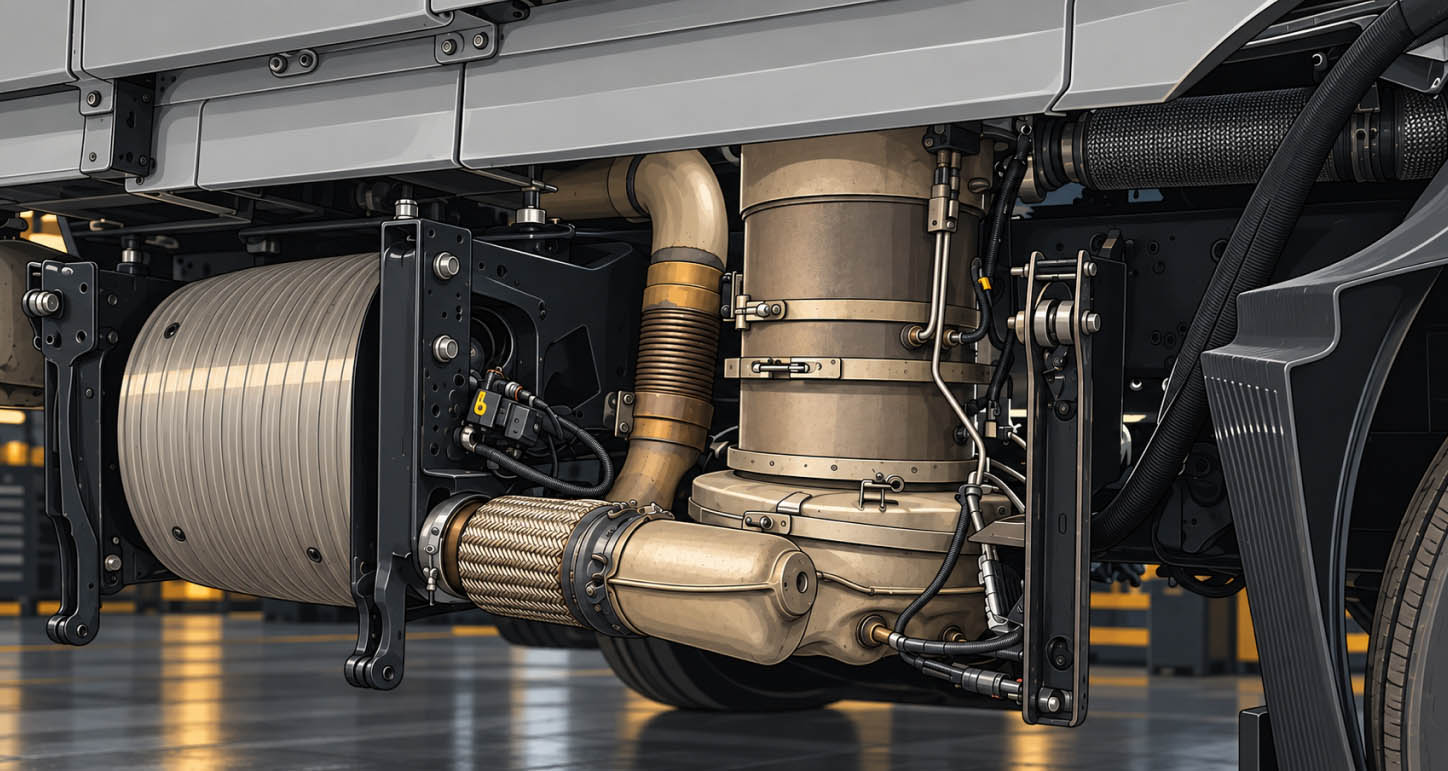
When troubleshooting a Volvo D13 won't regen condition, the most useful information is not simply the list of DTCs.
A proper diagnostic session should allow you to see the status of the regeneration criteria.
Depending on the truck generation and software, look for parameters or statuses corresponding to:
regeneration requested
regeneration enabled
regeneration inhibit
temporary lockout
permanent/service lockout
soot load
DPF differential pressure
engine coolant temperature
accelerator position
clutch status
parking-brake status
transmission neutral
vehicle speed
PTO status
exhaust temperatures
active DTCs
aftertreatment system status
Volvo diagnostic tools provide functions for manual DPF service regeneration, sensor/parameter monitoring and guided diagnostics on applicable trucks.
The key is to find the first condition marked CHECK/NOK, rather than replacing components based only on the dashboard message.
Common Diagnostic Mistakes
Replacing the DPF immediately
A DPF is often blamed because the truck says regeneration is unavailable. But a blocked regeneration request can be caused by a simple brake, transmission, PTO, pedal or temperature input.
Clearing DTCs without fixing the cause
Clearing the code may temporarily remove the visible warning but will not necessarily remove the regeneration inhibit.
Forcing regen before checking soot level
A temporary lockout may simply mean the truck does not need regeneration yet. Excessive soot loading can have the opposite problem: the truck may require a service-level procedure.
Ignoring live data
A physical inspection can show that the parking brake is applied or the transmission is in neutral. Only electronic data confirms that the ECM actually sees those states.
Assuming every D13 has identical criteria
D13 engines span multiple generations and vehicle configurations. Regeneration logic can differ between model years, emissions generations, chassis configurations and software mapping.
Important: “Regeneration Not Possible” Is a Logic Message
The dashboard message should be interpreted as:
The ECM has rejected the regeneration request because one or more required conditions are not currently satisfied.
It should not automatically be interpreted as:
The DPF needs to be replaced.
The most efficient repair is therefore to identify the exact failed criterion first.
Important: Do Not Ignore a Critical Soot Warning
If the truck reports a critical soot condition, severe derate, or instructs the operator to contact a workshop, stop treating the problem as a normal parked-regen inconvenience.
Volvo documentation distinguishes ordinary regeneration requests from critical soot conditions and service-level regeneration requirements.
Continuing to operate a severely soot-loaded engine can increase restriction and may eventually lead to stronger derate or shutdown conditions.
FAQ
Why does my Volvo D13 say “Regeneration not possible”?
The ECM has detected that one or more regeneration-start conditions are not satisfied. Common causes include PTO activation, incorrect transmission status, parking-brake input, accelerator or clutch input, low engine temperature, active DTCs or a regeneration lockout.
Why is my Volvo parked regen not working even though the truck is stopped?
Being stopped is only one requirement. The transmission must normally be in neutral, the parking brake must be applied and recognized, the accelerator and clutch must be released, the engine must be sufficiently warm, and there must be no blocking faults.
Can a PTO prevent Volvo D13 regeneration?
Yes. On many configurations the PTO must be disabled before a parked regeneration can start. Some Volvo trucks are specifically configured for regeneration with the PTO engaged, but the required PTO and engine-speed configuration must be present.
Can low engine temperature prevent regeneration?
Yes. The D13 regeneration strategy requires the engine to reach a minimum operating temperature. A referenced Volvo D13 procedure specifies coolant temperature above 35°C (95°F).
Can an accelerator-pedal problem stop a parked regen?
Yes. The ECM needs to see the accelerator as released. A faulty pedal sensor, wiring problem or implausible signal can therefore keep the regeneration criteria in a failed state.
What does Volvo temporary regen lockout mean?
A temporary lockout generally means the system is preventing manual regeneration because regeneration is not currently required, such as when calculated soot loading is below the regeneration threshold.
Can active DTCs prevent a Volvo D13 from regenerating?
Yes. Active faults in the engine or aftertreatment system can inhibit parked regeneration. The DTC should be diagnosed and repaired rather than simply cleared.
What if the DPF soot level is too high for parked regeneration?
A normal parked regeneration may no longer be permitted. Depending on the engine generation and soot-load level, the truck may require a service regeneration or DPF service using appropriate diagnostic equipment.
Why does regeneration start but then fail?
When regeneration starts but cannot complete, investigate exhaust-temperature generation and maintenance rather than only the basic start criteria. Possible causes include temperature-sensor problems, exhaust leaks, fuel-dosing problems, DOC/AFI problems, low exhaust temperature or excessive DPF restriction.
What is the fastest way to diagnose a Volvo D13 regen problem?
Use diagnostic software to view the regeneration criteria and identify the first condition reported as CHECK/NOK. Then verify the corresponding live-data input, check active DTCs and confirm the calculated soot level before testing or replacing aftertreatment components.