What makes the Volvo D13 such a popular heavy-duty diesel engine?
The D13 combines strong low-RPM torque, substantial horsepower, good fuel efficiency, and electronic engine management in one platform. It was developed to handle the demands of modern heavy-duty trucking while improving efficiency and emissions control compared with older generations of diesel engines.
That balance is a big part of why the D13 became such a common sight in Volvo trucks and remained in production through multiple generations.
Meet the Volvo D13
The Volvo D13 is not simply a larger version of the older D12.
It represents a different stage in the development of Volvo's heavy-duty diesel engines.
Introduced in the 2000s, the D13 was designed to deliver the pulling power expected from a large-displacement truck engine while improving fuel efficiency, emissions control, and electronic management.
The engine quickly became one of the main powerplants in Volvo's heavy-duty truck lineup and was also used in related applications under different configurations.
Over the years, Volvo continued updating the D13 to meet increasingly strict emissions requirements and changing demands from fleets and owner-operators.
That long development history is important because there is no single "Volvo D13" specification.
There are multiple generations, ratings, and configurations.
Volvo D13 Engine Specifications
The D13 is a six-cylinder inline diesel with a displacement of approximately 12.8 liters in many North American applications.
Its basic architecture was designed around the requirements of heavy commercial vehicles: high torque at relatively low engine speeds, strong thermal management, turbocharging, and electronic control of fuel delivery.
Typical Volvo D13 engine specs include:
Specification | Volvo D13 |
Engine type | Inline 6-cylinder diesel |
Displacement | Approx. 12.8 L |
Aspiration | Turbocharged |
Charge air | Charge-air cooled |
Fuel system | Electronic fuel injection |
Application | Heavy-duty trucks |
Configuration | Multiple generations and ratings |
Exact specifications vary by engine generation, market, model year, and calibration.
That is especially important when researching Volvo D13 engine specifications. A D13 from an earlier emissions generation can have substantially different hardware and software from a later D13, even though both carry the same basic engine name.
Volvo D13 Horsepower
So, how much horsepower does a Volvo D13 have?
Again, the answer depends on the version.
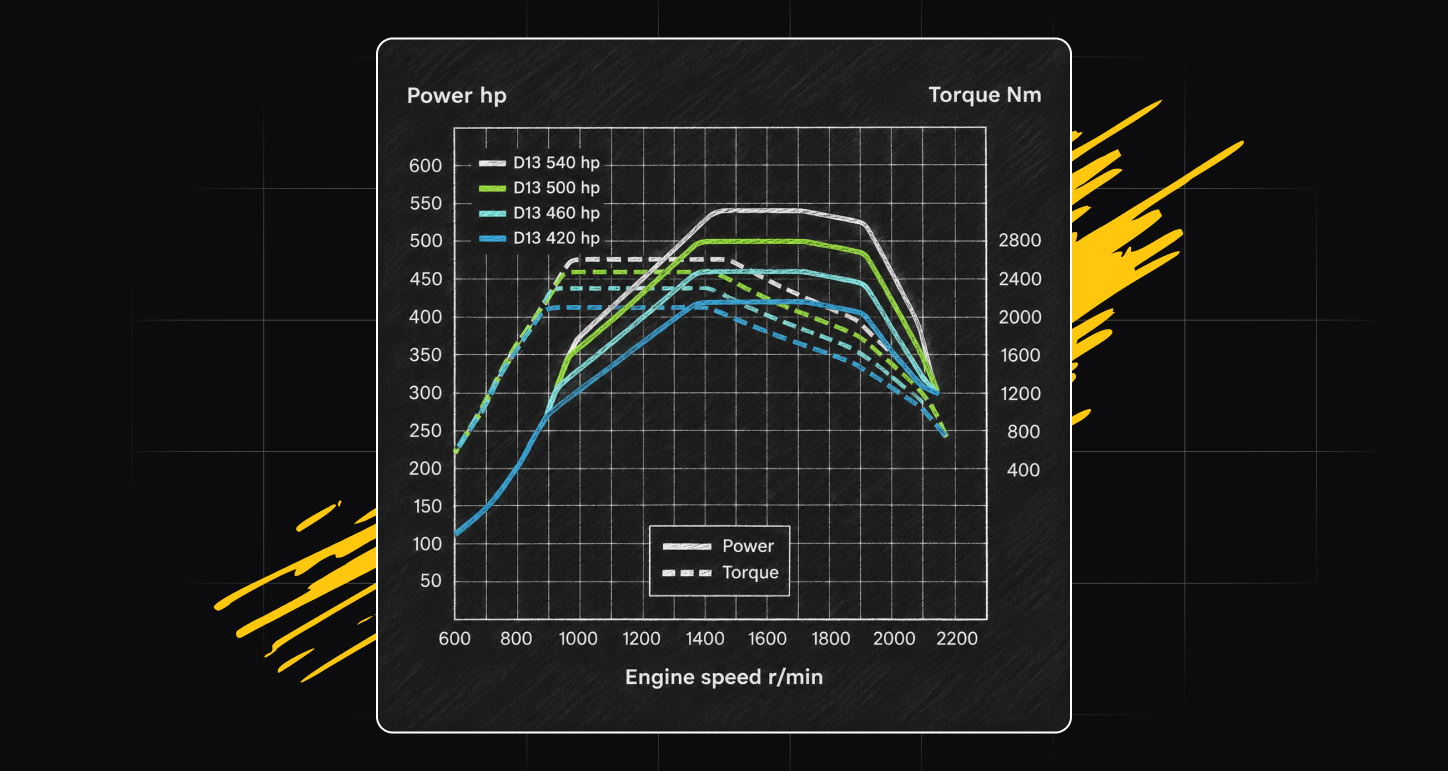
Volvo D13 engines have been offered with ratings ranging from roughly 375 hp to more than 500 hp, with specific configurations designed for different applications.
Some versions prioritize fuel economy and long-distance operation, while higher-output calibrations are intended for heavier loads and demanding routes.
This flexibility is one reason the D13 has been used across such a wide range of heavy-duty applications.
The engine does not need to operate at its maximum horsepower all the time. For a working truck, the more important question is how efficiently the engine delivers usable power across the operating range.
Volvo D13 Torque
Horsepower tells only part of the story.
For a heavy truck, torque is what the driver feels when the trailer is loaded and the road starts climbing.
Depending on the version, Volvo D13 engines can produce approximately 1,450–1,850 lb-ft of torque.
The exact figure depends on the engine rating and generation.
The D13's torque characteristics are one of its defining features. The engine is designed to produce strong pulling power at relatively low RPM, allowing the truck to move heavy loads without constantly operating at high engine speeds.
That is useful not only for performance but also for fuel economy.
Volvo D13 Fuel Consumption and Fuel Economy
Fuel consumption is one of the areas where the D13 became particularly important.
There is no universal Volvo D13 fuel-consumption number because real-world fuel economy depends on much more than the engine itself.
Truck weight, trailer configuration, terrain, weather, average speed, gearing, idle time, driving style, tire condition, and aerodynamic setup can all have a significant effect.
A D13-powered highway tractor can achieve very different fuel economy figures under different operating conditions.
This is why comparing two D13 trucks only by their advertised fuel consumption can be misleading.
The engine's contribution comes from its ability to produce the required torque efficiently while working with the transmission and the truck's overall powertrain strategy.
In modern Volvo trucks, engine calibration, automated transmissions, predictive shifting, and aerodynamic design all work together.
Fuel economy is therefore a system result, not simply an engine specification.
Why Does the D13 Use Less Fuel Than Older Engines?
One of the major changes between older engines such as the D12 and newer D13 generations was the level of electronic control.
Modern diesel engines can precisely manage fuel delivery, injection timing, boost pressure, and other operating parameters.
That allows the engine to respond to changing load conditions without simply throwing more fuel at the problem.
The D13 was developed during a period when manufacturers were increasingly focused on extracting more work from every gallon of diesel.
The result was not just more horsepower.
It was a better balance between power, torque, emissions, and fuel economy.
Volvo D13 Engine Reliability
Volvo D13 reliability is one of the reasons the engine became so common in commercial trucking.
The basic engine architecture is designed for high-mileage, high-load operation. But reliability should not be confused with being maintenance-free.
The D13 is a modern electronically controlled diesel, and its complete operating system includes far more than the mechanical engine itself.
Fuel injection, turbocharging, sensors, electronic controls, cooling, aftertreatment, and other supporting systems all contribute to how the truck performs.
This means an owner evaluating a used D13 should look at the complete engine and vehicle history rather than judging reliability from the engine name alone.
A well-maintained D13 with a known history can remain productive for a very long time.
Volvo D13 Engine Problems
Searches for Volvo D13 engine problems and Volvo D13 problems often produce long lists of possible failures.
The reality is more nuanced.
The D13 has evolved through multiple generations, and the problems associated with an early D13 should not automatically be applied to a much newer version.
Potential areas of concern on older or heavily used engines can include:
Fuel-system and injector-related issues
Turbocharger and charge-air system problems
Cooling-system components
Sensors and electronic components
Wiring and electrical connections
Oil leaks and age-related wear
Emissions and aftertreatment systems on applicable generations
Some of these issues are not unique to the D13 at all. They are common concerns on high-mileage heavy-duty diesel trucks.
The important distinction is between an engine problem and a problem with one of the systems supporting the engine.
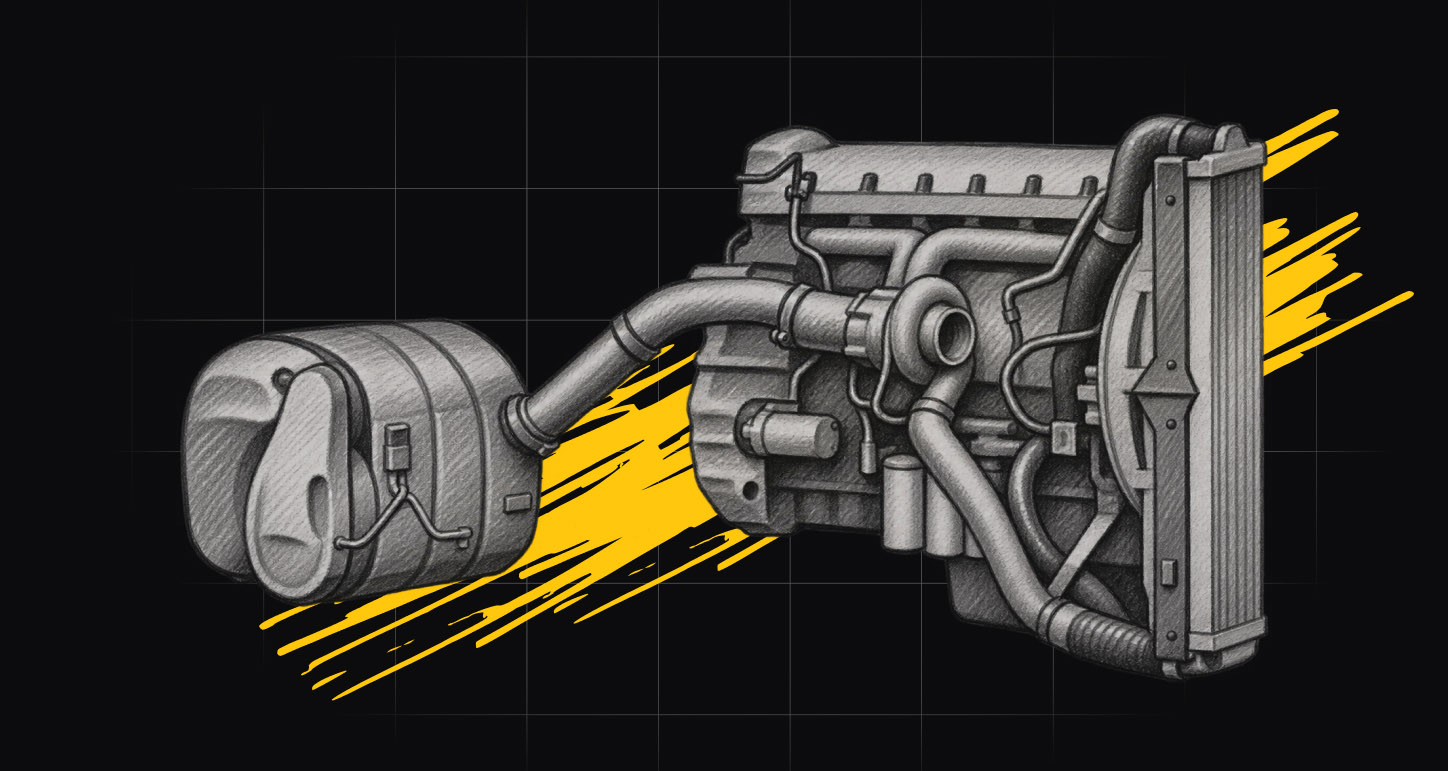 A fault in an emissions component, sensor, or electronic system does not automatically mean the D13 itself has suffered major mechanical damage.
How Long Does a Volvo D13 Engine Last?
There is no single mileage number that defines the Volvo D13 engine life.
Commercial diesel engines are heavily influenced by how they are used.
A highway truck that spends most of its life at steady speed under reasonable loads operates very differently from a vocational truck that repeatedly accelerates under heavy weight, idles for long periods, and works in severe conditions.
Maintenance is equally important.
Oil quality, service intervals, cooling-system condition, fuel quality, operating temperature, and the condition of supporting components all influence long-term engine life.
For that reason, a well-documented D13 with high mileage can sometimes be a more attractive used engine than a lower-mileage engine with an unknown history.
Volvo D13 Engine Review: What Do Owners Actually Get?
If we reduce the D13 to the things that matter to a truck owner, the formula is fairly straightforward.
You get a large inline-six diesel with strong torque, a broad range of power ratings, electronic control, and a design intended for long hours under load.
The engine's biggest advantage is not one spectacular specification.
It is the balance between several characteristics.
It can provide substantial pulling power without requiring extremely high RPM. It can be integrated with automated transmissions and modern truck electronics. And later generations were developed with increasingly strict fuel-economy and emissions requirements in mind.
That combination helped make the D13 a mainstream heavy-duty engine rather than a niche powerplant.
The D13 Is More Than the Engine Block
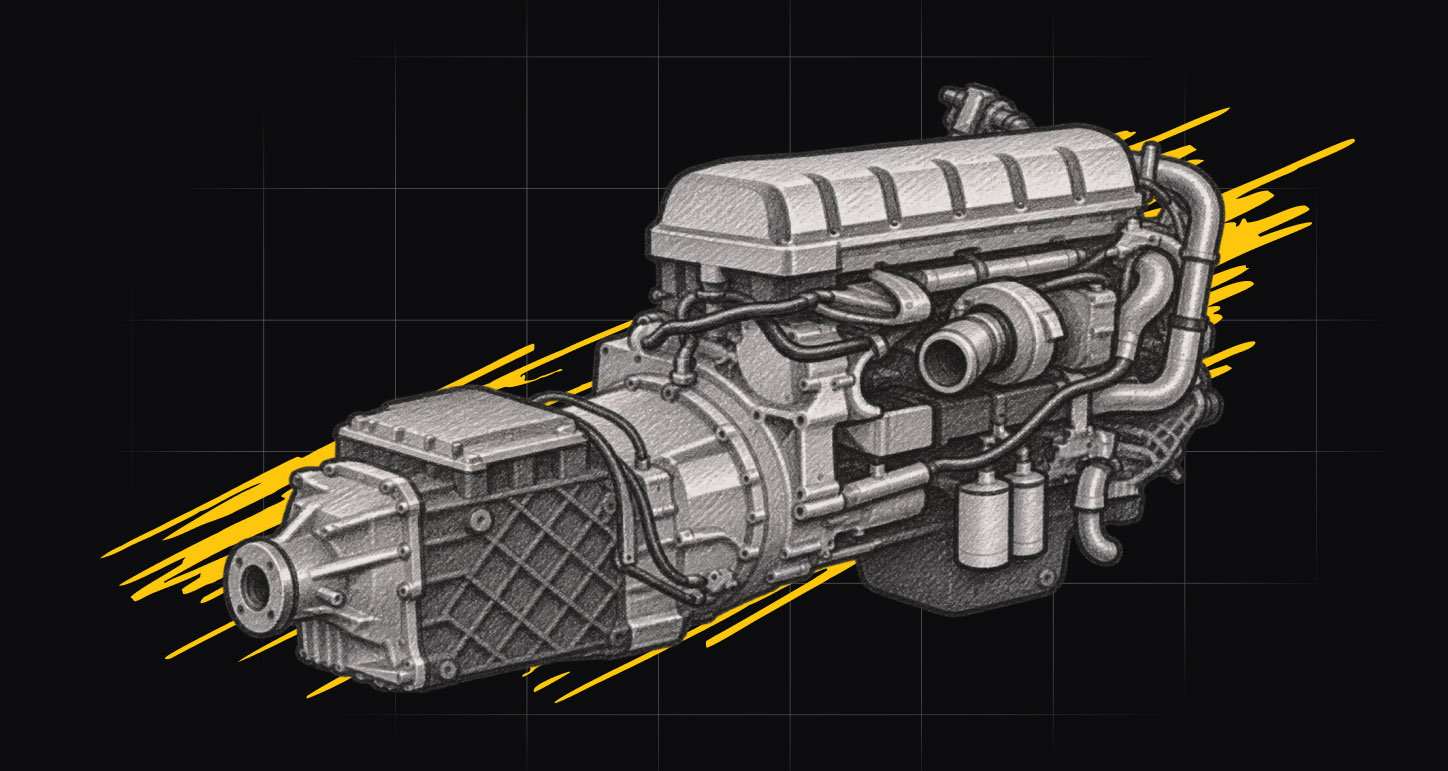 One reason discussions about modern diesel reliability can become confusing is that people often use "engine" to describe the entire powertrain.
A modern D13 truck is a network of mechanical and electronic systems working together.
The engine produces the power, but the transmission determines how that power reaches the wheels. Electronic controls manage engine operation. Turbocharging supplies the required air. Cooling systems control operating temperatures. Aftertreatment systems manage exhaust emissions.
When everything works together, the result is a highly efficient heavy-duty powertrain.
When one supporting system develops a fault, the driver may experience reduced performance even when the basic engine remains mechanically healthy.
That distinction is useful when evaluating D13-related problems.
Why Did the D13 Become an Industry Standard?
Calling any engine an "industry standard" is partly a matter of perspective, but the D13 has certainly become one of the familiar engines in modern heavy-duty Volvo trucking.
Its success comes from a combination of factors:
Strong torque output
Multiple horsepower ratings
Long-haul suitability
Focus on fuel economy
Continuous development across emissions generations
Integration with modern truck electronics and transmissions
Large installed base and extensive operating experience
The D13 was not designed to be a nostalgic old-school diesel.
It was designed to evolve.
And that may be the biggest difference between the D13 and engines such as the original D12.
Can a Volvo D13 Be Tuned?
Depending on the specific D13 generation, ECU, truck configuration, and intended application, ECU tuning can be used to modify engine operating parameters.
The available options are not identical across every D13.
A proper tuning decision starts with identifying the exact engine and ECU configuration and then determining which programming options are compatible with it.
For owners who want more usable power or torque from a working truck, the goal should be a programming that matches the engine's actual configuration rather than simply chasing the largest possible horsepower number.
Why the D13 Still Matters
The Volvo D13 became successful because it solved several problems at the same time.
It delivered the displacement and torque expected from a heavy-duty diesel while moving the platform toward better electronic control, fuel economy, and emissions management.
Its many generations also show how dramatically diesel technology changed over the years.
That is why there is no single answer to questions like "How much horsepower does a Volvo D13 have?" or "How long does a D13 last?"
The exact engine version matters.
But across its different generations, the basic idea remained the same: build a heavy-duty diesel that can spend thousands of hours doing real work.
That is ultimately what made the D13 important — not one horsepower number, but its ability to keep trucks moving.
FAQ
What are the Volvo D13 engine specifications?
The Volvo D13 is an inline-six heavy-duty diesel with approximately 12.8 liters of displacement in many North American applications. Exact specifications vary by generation, model year, market, and engine rating.
How much horsepower does a Volvo D13 have?
Depending on the version, Volvo D13 engines have been available with approximately 375 hp to more than 500 hp.
How much torque does a Volvo D13 produce?
Depending on the engine generation and rating, the D13 can produce approximately 1,450–1,850 lb-ft of torque.
Is the Volvo D13 reliable?
The D13 has a strong reputation for long-term commercial use. Its reliability depends heavily on maintenance, operating conditions, mileage, and the specific generation of the engine.
What are the most common Volvo D13 problems?
Potential concerns on older or high-mileage D13 engines can involve fuel-system components, turbocharging, cooling systems, sensors, wiring, and emissions-related systems. The exact issues depend on the engine generation.
How long does a Volvo D13 engine last?
There is no fixed engine-life limit. A D13's service life depends on maintenance, workload, operating conditions, and the condition of its supporting systems. Properly maintained engines can accumulate very high mileage.
What fuel economy does a Volvo D13 get?
There is no single fuel-economy figure that applies to every D13 truck. Fuel consumption depends on truck weight, aerodynamics, transmission, gearing, speed, terrain, weather, idle time, and driving style.
Can a Volvo D13 be tuned?
Some D13 configurations support ECU tuning. Available options depend on the engine generation, ECU, truck configuration, and calibration. The exact setup should be identified before choosing a tuning solution.