# Tuning and DPF/SCR Removal on Volvo Penta Engines for Boats and Yachts
Canonical: https://volvodpfdelete.com/use-cases/volvo-penta-dpf-scr-removal-tuning/
Content type: technical-overview
Author: Michael Carter
Published: 2026-09-03T00:00:00.000Z
Modified: 2026-11-02T07:06:04.537Z
Category: Use Cases
Brand: Volvo Penta
Vehicle type: marine
Systems: DPF, SCR, EVC, ECU
Intent: modification-overview
Generated at: 2026-11-19T10:14:14.973Z
> Learn why boat owners consider Volvo Penta DPF and SCR removal, what marine ECU tuning involves, and what to check before making changes.
Volvo Penta
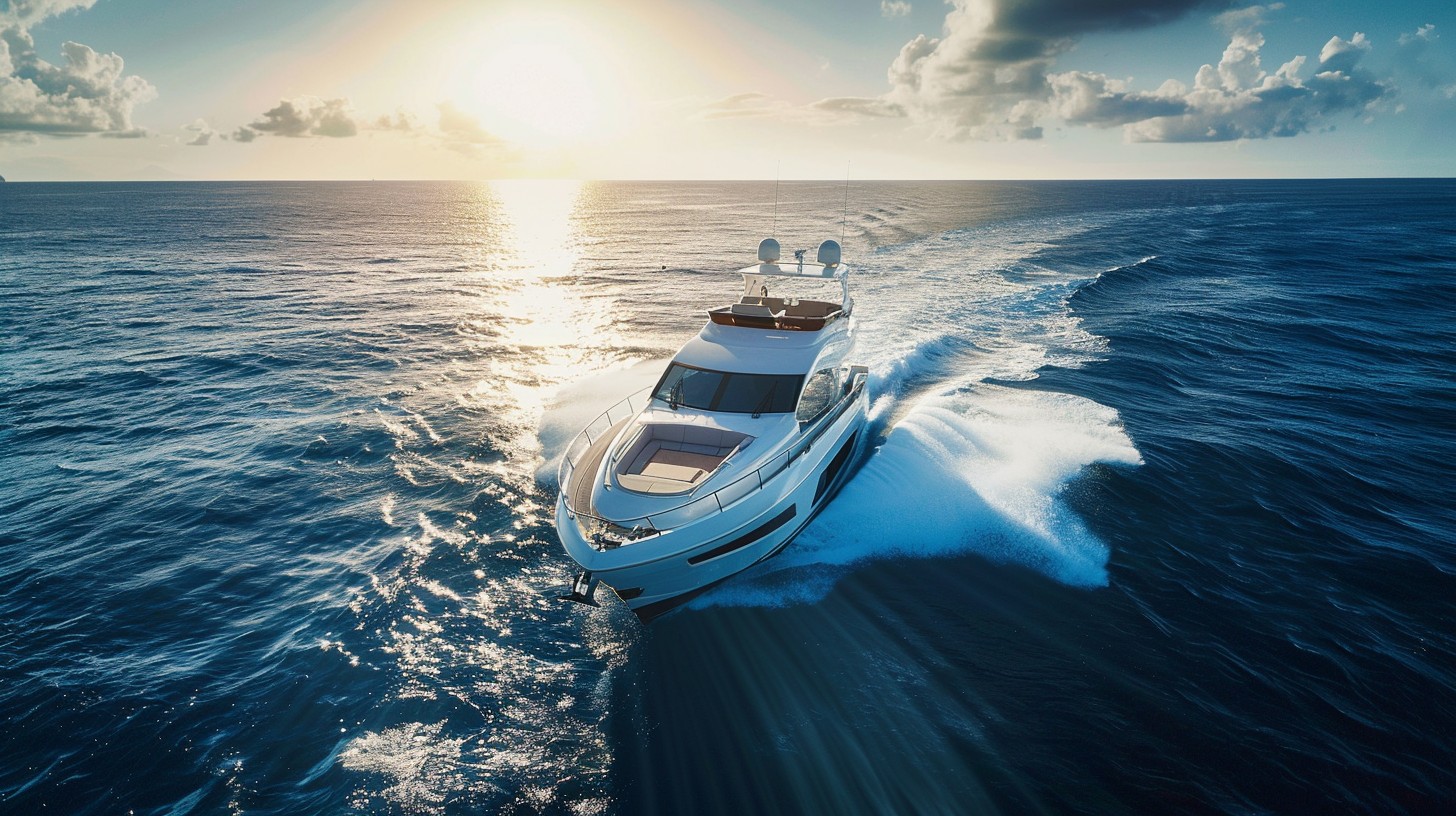
Every modern Volvo Penta engine is equipped with a DPF and SCR emission system. These systems reduce harmful exhaust and comply with emissions standard set by the IMO (International Maritime Organization) and EPA (United States Environmental Protection Agency). However, these systems can also present issues boat and yacht owners must contend with, including increased fuel consumption, less power, exhaust related issues, restrictions on RPMs, and expensive maintenance. That’s why tuning and DPF/SCR deactivation have become popular solutions among vessel owners looking to improve reliability and cut operating costs.
In this article, we’ll break down the key nuances, benefits, and risks of these upgrades—and explain why proper tuning is far more important than any mechanical modification.
## **Why Do Boat Owners Remove DPF and SCR?**
Despite their environmental benefits, exhaust-aftertreatment systems on marine diesel engines frequently lead to several operational challenges:
### **1\. Power and Torque Loss**
The DPF creates exhaust restriction, while the SCR requires precise dosing of the DEF/AdBlue reagent. Under high loads, this can result in noticeable torque drop, particularly during rapid acceleration or when getting the boat on plane.
### **2\. Fault Codes and Limp Mode**
Some of the most popular complaints from Volvo Penta owners are:
- NOx sensor errors
- DEF dosing system malfunctions
- Clogged diesel particulate filter
- Limp-mode activation with RPM limitations
For a boat, these issues are critical—loss of power offshore can be dangerous.
### **3\. High Maintenance Costs**
During their operation, marine engines experience fluctuations in load and speed, which in turn leads to faster clogging than the DPFs found in vehicles. Regular regenerations, filter exchanges, and SCR cleanings have their costs, and so do sensor updates.
#### **4\. Increased Fuel Consumption**
Any faults in the DPF/SCR system create added load on the engine, increasing fuel consumption by **5–15%**.
## **What Does Volvo Penta Tuning With DPF/SCR Deactivation Provide?**
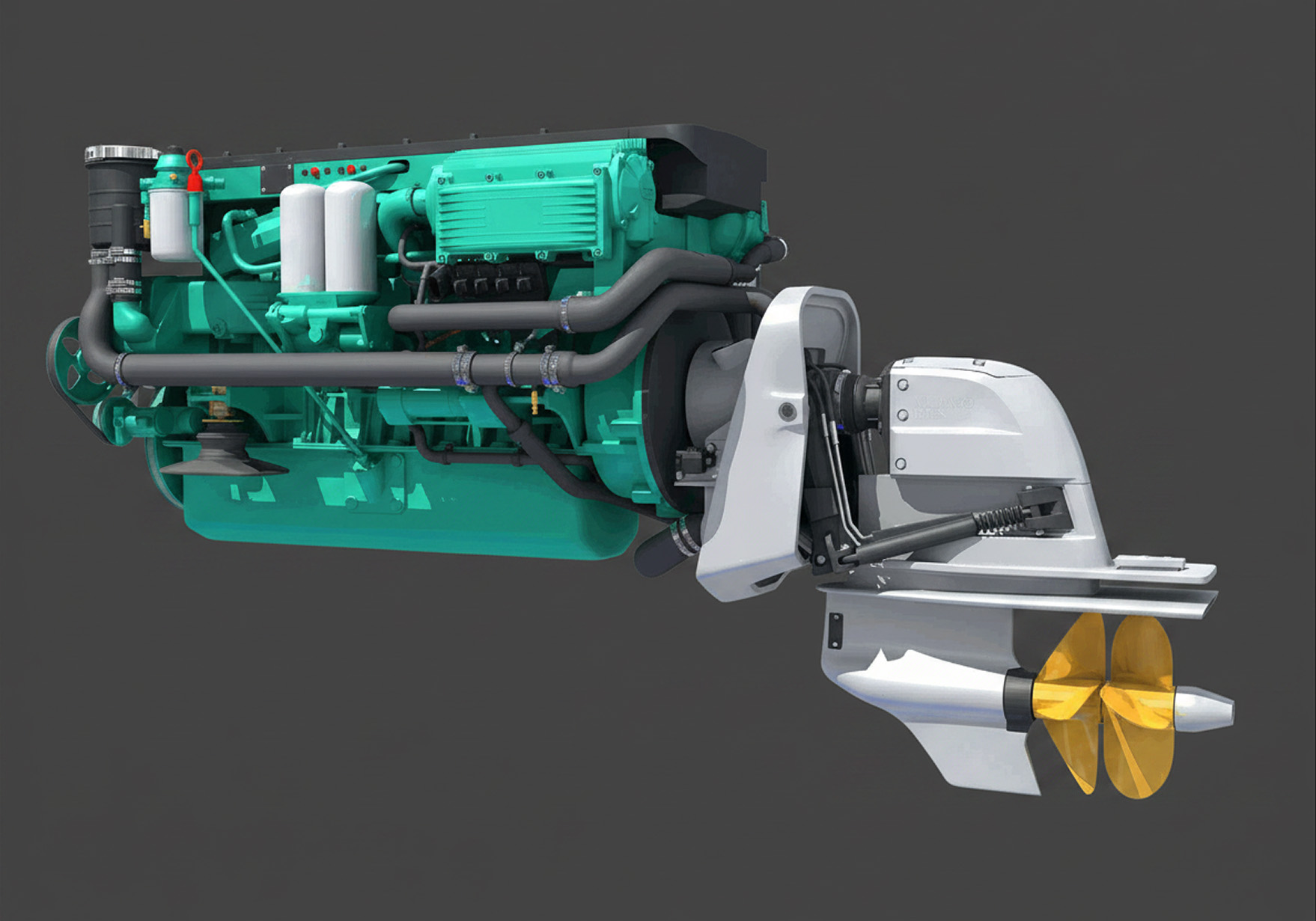
Volvo Penta marine engine with a twin-propeller sterndrive, viewed from the filter side.
Proper electronic optimization and emissions-system deactivation deliver:
### **Increased Power and Torque**
Removing restrictions and optimizing injection maps allows the engine to run more freely, improving acceleration and planning performance.
### **Reduced Fuel Consumption**
A correctly calibrated ECU program reduces engine load and optimizes fuel delivery at mid and high RPM.
### **Complete Elimination of Exhaust-Related Errors**
After tuning, the ECU stops logging SCR/DPF faults and no longer forces the engine into limp mode.
### **Extended Engine Life**
Letting the exhaust backpressure loosen reduces the stress of the exhaust system and the turbocharger.
### **No More Regenerations or Aftertreatment Maintenance**
No filter cleaning, no sensor replacements, no DEF refills.
## **Technical Nuances of DPF/SCR Removal on Volvo Penta**
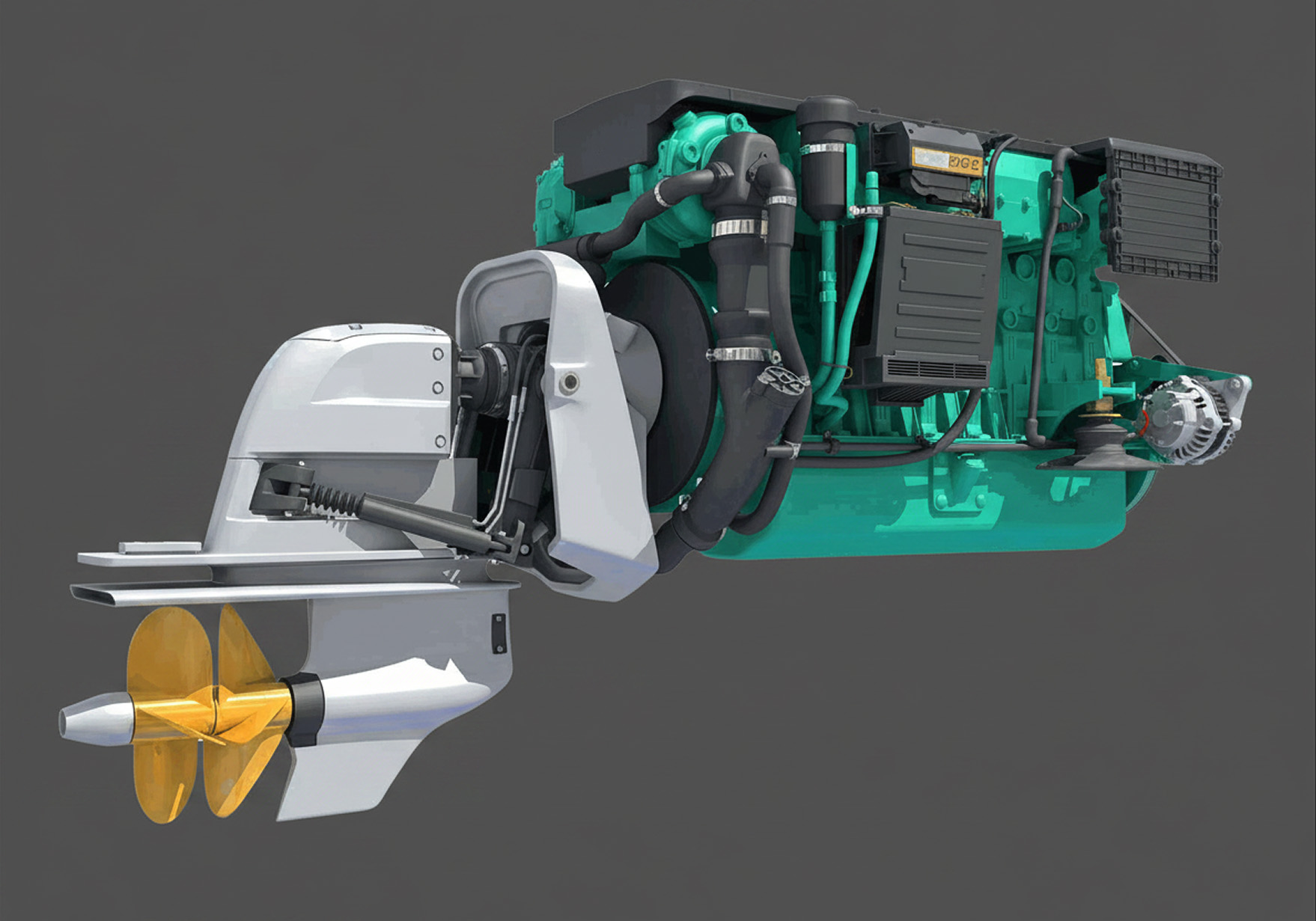
An opposite-side view of the Volvo Penta engine and twin-propeller sterndrive assembly.
Emissions systems on marine engines need specialized removals. Here’s what to think about:
### **1\. Software-Only Deactivation Is Not Enough**
Both software and hardware modifications are necessary:
- remove DPF internals or install a straight section
- disable SCR and the DEF pump
- properly terminate NOx sensors
### **2\. ECU Firmware Update**
Volvo Penta uses unique EVC/ECU firmware different from Volvo truck engines. Inexperienced tuning can cause:
- unstable RPM behavior
- turbo overheating
- detonation and reduced engine life
### **3\. Calibration for Marine Operating Conditions**
The operation of a boat engine is completely different from a truck engine:
- long periods under heavy load
- saltwater exposure
- vibrations
- temperature fluctuations
Fuel maps must be tailored specifically for these conditions.
### **4\. Moisture and Corrosion Protection**
After physical removal, it’s crucial to:
- seal all connectors
- cap removed lines
- protect SCR wiring
## **Real-World Numbers After Professional Deactivation**
_(Based on 2023–2025 dyno tests and owner feedback)_
| **Parameter** | **Stock** | **After Stage 5 Removal** | **Gain** |
| --- | --- | --- | --- |
| Power (hp) | 300–480 | +18–28% | +55–130 hp |
| Torque (Nm) | 950–1800 | +20–30% | +250–500 Nm |
| Fuel Consumption | 100% | –12…–22% | up to –45 l/h on 400 hp |
| AdBlue Usage | 8–15% of fuel | 0% | saves 500–2000 l/season |
| Exhaust Temperature | 350–450°C | 480–580°C | faster warm-up |
| System Reliability | frequent errors | errors fully removed | — |
### **Possible Downsides and Risks**
Although tuning provides noticeable improvements, it’s important to keep the drawbacks in mind:
- increased NOx and soot emissions
- potential issues with authorities in countries with strict regulations
- the need to use qualified specialists—not “garage-level” tuners
Improper tuning can lead to higher fuel consumption, overheating, and engine damage.
### **When Is Volvo Penta Tuning Truly Justified?**
DPF/SCR removal and ECU tuning make sense when:
- the engine loses power under load
- the boat struggles to get on plane
- NOx or DEF errors constantly appear
- the DPF keeps clogging
- the owner needs maximum reliability far from service facilities
- maximum torque and stable cruising performance are required
### **Should You Do It in 2025–2026?**
If you:
- operate your boat extensively (150–200+ engine hours per season)
- don’t want to depend on AdBlue or frequent service
- want +20–30% power and –15–20% fuel consumption
…then DPF/SCR removal + ECU tuning is one of the most cost-effective upgrades for your boat or yacht.
### **Conclusion**
The tuning and DPF/SCR deactivation for Volvo Penta marine engines can increase power, reliability, and operating cost efficiency. Also, these upgrades need to be done by a professional with experience in marine diesel systems.
Optimizing your boat's performance makes it much more stable and comfortable for the long-distance trips, heavy use, and sailing in remote areas where paddles and other service areas are unavailable.
## Sources
- [D13 MP (R4-800)](https://uatrident.com/wp-content/uploads/2019/10/23432752_02_d13-800.pdf) — content/uploads/2019/10/23432752\_02\_d13-800.pdf Volvo Penta 23432752, Issue 02, pp. 1–2, 4, 9–10
- [Volvo Penta Inboard Diesel D13-700/800](https://irp.cdn-website.com/dca030c4/files/uploaded/D13-700_800_IMO_III_v1.pdf) — IMO Tier III and US EPA Tier 3, pp. 1–2
- [IMO tier III range expands with an upgraded D16 engine](https://www.volvopenta.com/about-us/news-page/2020/nov/imo-tier-iii-range-expands-with-an-upgraded-d16-engine/) — Volvo Penta, November 2020, SCR system description
- [D13 IMO III IPS](https://www.volvopenta.com/marine/all-marine-engines/d13-ips-imo-iii/) — Volvo Penta, SCR system and performance
- [Nitrogen Oxides (NOx) – Regulation 13](https://www.imo.org/en/ourwork/environment/pages/nitrogen-oxides-%28nox%29-%E2%80%93-regulation-13.aspx) — MARPOL Annex VI, Tier III applicability
- [EPA Tampering Policy: The EPA Enforcement Policy on Vehicle and Engine Tampering and Aftermarket Defeat Devices under the Clean Air Act](https://www.epa.gov/sites/default/files/2020-12/documents/epatamperingpolicy-enforcementpolicyonvehicleandenginetampering.pdf) — November 23, 2020, Scope of this Policy, pp. 2–5
- [What general actions does this regulation prohibit?](https://www.ecfr.gov/current/title-40/chapter-I/subchapter-U/part-1068/subpart-B/section-1068.101) — 40 CFR § 1068.101(b)(1)–(2)
Sources last checked: 2026-11-10
[Use Cases](https://volvodpfdelete.com/use-cases/)
## Related reading
[All articles](https://volvodpfdelete.com/search/)

Use Cases
### [Volvo Excavator DPF Delete: Is It Worth Removing the DPF from Your Excavator?]()
While Volvo excavators are equipped with DPF systems to attempt to curb emissions, the systems can pose operational issues, including fuel consumption, operational downtime, and issues with system regeneration. This article discusses the Diesel Particulate Filter system on Volvo excavators including the EC210, EC220 and EC300, including what occurs if the system is bypassed. The article discusses the DPF delete procedure, the plausibility of improved performance and fuel consumption, and the implications in terms of warranty and legality.
Read guide

Use Cases
### [DPF Features on Volvo EC, EW, and L Equipment: Common Problems and Practical Solutions]()
A guide to troubleshooting DPF-equipped Volvo EC and EW excavators and L wheel loaders. Learn how to check failed regens, sensor readings, soot loading, and ash buildup before deciding whether the filter needs cleaning or replacement.
Read guide
Use Cases
### [Volvo DPF Delete for Off-Road Use: What You Need to Know]()
Volvo trucks and construction equipment can show DPF warnings when regeneration keeps getting interrupted. This guide explains soot and ash buildup, what a DPF delete changes, and what to check before deciding how to address recurring problems.
Read guide
[Explore all articles](https://volvodpfdelete.com/search/)