# IMO Environmental Regulations for Marine Engines: How to Comply Without Diesel Particulate Filters?
Canonical: https://volvodpfdelete.com/use-cases/imo-regulations-marine-engines-without-dpf/
Content type: regulatory-guide
Author: David Nelson
Published: 2025-10-09T00:00:00.000Z
Modified: 2025-10-10T07:06:00.000Z
Category: Use Cases
Brand: Volvo
Vehicle type: marine
Systems: DPF, SCR, NOx, SOx
Intent: compliance
Generated at: 2026-11-19T10:14:14.973Z
> Learn how IMO NOx and fuel sulfur rules apply to marine engines, and when approved fuels, scrubbers, or engine systems can meet them without a DPF.
Volvo
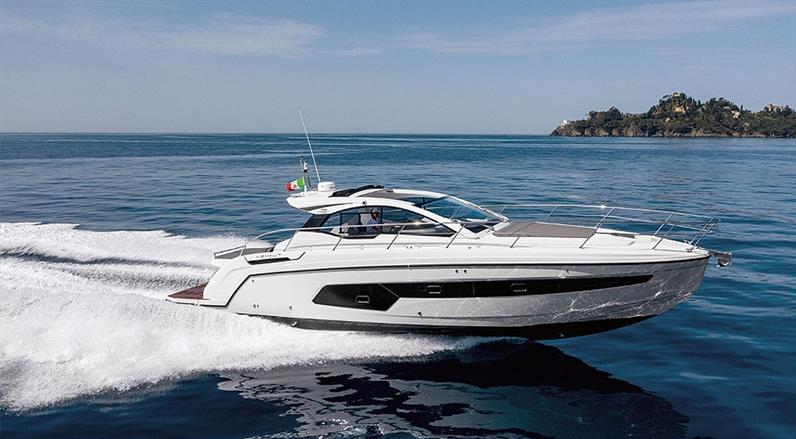
Between 2020 and 2025, the maritime industry is experiencing one of the most aggressive waves of environmental pressure in its history. The International Maritime Organization (IMO) is steadily tightening requirements: Tier III (since 2016 in ECA zones — Emission Control Areas), the global 0.5% sulfur cap introduced in 2020, and soon new rules on particulate matter emissions (PM — Particulate Matter), carbon intensity (CII — Carbon Intensity Indicator), and future regulation of black carbon in the Arctic.
The most obvious way to reduce soot is the installation of exhaust aftertreatment systems such as Diesel Particulate Filters (DPF) or Selective Catalytic Reduction (SCR). However, these systems are expensive (€1–4 million per vessel), require significant space, increase exhaust backpressure, raise fuel consumption by 2–4%, and create fire risks during regeneration.
So, is it possible to meet current and future IMO requirements without particulate filters at all?
Yes, it is. And many shipowners are already doing exactly that.
## **Switching to VLSFO + Water-in-Fuel Emulsions**
VLSFO (Very Low Sulfur Fuel Oil) alone already reduces soot emissions by 20–40% compared to heavy fuel oil with 3.5% sulfur.
By adding proven water-in-fuel emulsions (10–15% water content), you can achieve an additional 30–50% reduction in particulate matter and up to 7–10% fuel savings.
**Example:** Since 2021, the Danish company _Emulsified Fuels_ has been installing its systems on bulk carriers and container ships — with no DPFs at all, while black smoke has disappeared completely.
### **Upgrading Fuel Injection and Turbocharging Systems (Without Engine Replacement)**
- Installation of electronic common rail injection (Miller cycle + increased injection pressure up to 2,200–2,500 bar)
- Two-stage turbocharging
- Optimization of valve timing
**Result:** PM reduction of 50–70% and NOx reduction of 15–25% without SCR.
MAN and WinGD offer such retrofit packages under names like _“Tier III Ready Retrofit”_ and _“EcoMOD”_ — at a cost 3–5 times lower than SCR + DPF systems.
### **Wet Exhaust Gas Cleaning Systems (Wet Scrubbers) in Closed-Loop Mode**
Open-loop scrubbers are increasingly banned in ports worldwide. However, hybrid and closed-loop scrubbers simultaneously remove sulfur and up to 60–80% of particulate matter.
In practice, this delivers an effect similar to a particulate filter, but without solid ash accumulation and without regeneration — the soot is simply washed into the sludge tank.
### **Liquefied Natural Gas and Dual-Fuel Engines**
The most radical, yet already widely adopted solution.
LNG-powered diesel-electric or dual-fuel engines reduce particulate matter by up to 99%, NOx by 85–90%, and CO₂ by 20–25%.
Yes, CAPEX (Capital Expenditures) is high, but since 2023 LNG prices in Rotterdam and Singapore have often been lower than VLSFO. In addition, new EU ETS (European Union Emissions Trading System) rules and FuelEU Maritime regulations make LNG even more economically attractive.
### **Biofuels and “Drop-in” HVO**
Hydrotreated Vegetable Oil (HVO) and second-generation FAME biodiesel are already certified by most major engine manufacturers (MAN, Wärtsilä, WinGD).
Particulate matter is reduced by 30–80%, depending on the blend ratio (B30–B100).
The key advantage: no equipment modifications are required.
### **Electrification and Hybrid Power Systems**
- For coastal vessels and harbor tugs: batteries combined with low-power diesel generators.
- For ocean-going vessels: auxiliary hybrid Power Take-Off / Power Take-In (PTO/PTI) systems.
Even today, these systems allow the main engine to be shut down in ECA zones and during slow steaming.
### **What Should You Choose for 2025–2030?**
**Quick guide:**
- **Older vessels (pre-2010) operating mostly outside ECA** → VLSFO + fuel emulsions + optionally a closed-loop scrubber.
- **Operations in ECA zones and the Arctic** → injection and turbo upgrades or conversion to LNG.
- **Newbuilds or vessels still at the shipyard** → order dual-fuel ME-GI or WinGD X-DF engines from the start.
- **Green marketing and FuelEU Maritime readiness** → HVO or methanol-ready engines.
### **Conclusion**
Diesel particulate filters are yesterday’s solution for marine transport. They work, but they are too expensive and risky for most vessel types.
Today, the market offers at least 5–6 mature solutions that allow shipowners to meet — and even exceed — IMO limits for particulate matter and NOx without DPFs, and with lower long-term costs.
The key is to start calculating not only CAPEX (Capital Expenditures), but also OPEX (Operating Expenses) over a 10–15 year horizon, including future carbon costs under EU ETS and the CII index.
## Sources
- [Amendments to the Annex of the Protocol of 1997 to Amend MARPOL (2021 Revised MARPOL Annex VI)](https://wwwcdn.imo.org/localresources/en/KnowledgeCentre/IndexofIMOResolutions/MEPCDocuments/MEPC.328%2876%29.pdf) — MEPC.328(76), Regulations 4, 13 and 14
- [Nitrogen Oxides (NOx) – Regulation 13](https://www.imo.org/en/ourwork/environment/pages/nitrogen-oxides-%28nox%29-%E2%80%93-regulation-13.aspx) — IMO overview of MARPOL Annex VI Regulation 13
- [Sulphur oxides (SOx) and Particulate Matter (PM) – Regulation 14](https://www.imo.org/en/ourwork/environment/pages/sulphur-oxides-%28sox%29-%E2%80%93-regulation-14.aspx) — IMO overview of MARPOL Annex VI Regulation 14
- [Equivalents (SOx scrubber, etc.) – Regulation 4](https://www.imo.org/en/OurWork/Environment/Pages/Equivalents-%28Sox-scrubber,-etc.%29---Regulation-4.aspx) — IMO overview of MARPOL Annex VI Regulation 4
- [2021 Guidelines for Exhaust Gas Cleaning Systems](https://wwwcdn.imo.org/localresources/en/KnowledgeCentre/IndexofIMOResolutions/MEPCDocuments/MEPC.340%2877%29.pdf) — MEPC.340(77), adopted November 26, 2021
- [Amendments to the Technical Code on Control of Emission of Nitrogen Oxides from Marine Diesel Engines (NOx Technical Code 2008)](https://wwwcdn.imo.org/localresources/en/KnowledgeCentre/IndexofIMOResolutions/MEPCDocuments/MEPC.177%2858%29.pdf) — MEPC.177(58), sections 2.3.4 and 6.2.2, as amended
- [New sulphur emission limits enter into effect in the Mediterranean](https://www.imo.org/en/mediacentre/pages/whatsnew-2254.aspx) — IMO, May 1, 2025
- [Amendments to MARPOL Annex VI (Canadian Arctic and Norwegian Sea Emission Control Areas for Nitrogen Oxides, Sulphur Oxides and Particulate Matter, as appropriate)](https://wwwcdn.imo.org/localresources/en/KnowledgeCentre/IndexofIMOResolutions/MEPCDocuments/MEPC.392%2882%29.pdf) — MEPC.392(82), Regulations 13 and 14 changes, adopted October 4, 2024
- [Reduction in greenhouse gas and other emissions from ship engines: Current trends and future options](https://cris.vtt.fi/files/71984607/1_s2.0_S0360128522000624_main.pdf) — Progress in Energy and Combustion Science, Vol. 94, 2023, 101055; DOI 10.1016/j.pecs.2022.101055
- [Particulate Mass and Nonvolatile Particle Number Emissions from Marine Engines Using Low-Sulfur Fuels, Natural Gas, or Scrubbers](https://trepo.tuni.fi/bitstream/10024/215265/1/acs.est.8b05555.pdf) — Environmental Science & Technology, 53(6), 2019, pp. 3315–3322; DOI 10.1021/acs.est.8b05555
- [Experimental Study on the Performance and Emission Characteristics of a Diesel Engine on an Actual Ship Using Diesel Fuel and Water-Diesel Emulsion](https://saemobilus.sae.org/papers/experimental-study-performance-emission-characteristics-of-a-diesel-engine-actual-ship-using-diesel-fuel-water-diesel-emulsion-2022-01-5091) — SAE Technical Paper 2022-01-5091, October 31, 2022
- [Sustainability](https://www.volvopenta.com/about-us/sustainability/) — Volvo Penta, All new engines compatible with HVO fuel
Sources last checked: 2025-10-12
[Use Cases](https://volvodpfdelete.com/use-cases/)
## Related reading
[All articles](https://volvodpfdelete.com/search/)
Use Cases
### [Tuning and DPF/SCR Removal on Volvo Penta Engines for Boats and Yachts]()
Why Volvo Penta owners remove DPF and SCR, what proper marine ECU tuning delivers, and when these upgrades are truly justified.
Read guide

Use Cases
### [Volvo Excavator DPF Delete: Is It Worth Removing the DPF from Your Excavator?]()
While Volvo excavators are equipped with DPF systems to attempt to curb emissions, the systems can pose operational issues, including fuel consumption, operational downtime, and issues with system regeneration. This article discusses the Diesel Particulate Filter system on Volvo excavators including the EC210, EC220 and EC300, including what occurs if the system is bypassed. The article discusses the DPF delete procedure, the plausibility of improved performance and fuel consumption, and the implications in terms of warranty and legality.
Read guide
Use Cases
### [DPF Features on Volvo EC, EW, and L Equipment: Common Problems and Practical Solutions]()
A guide to troubleshooting DPF-equipped Volvo EC and EW excavators and L wheel loaders. Learn how to check failed regens, sensor readings, soot loading, and ash buildup before deciding whether the filter needs cleaning or replacement.
Read guide
[Explore all articles](https://volvodpfdelete.com/search/)