# Fuel Efficiency After DPF/EGR Tuning on Volvo Trucks and Construction Equipment: Why Removal Is More Effective Than Constant Repairs
Canonical: https://volvodpfdelete.com/delete-tuning/volvo-dpf-egr-tuning-fuel-efficiency/
Content type: technical-overview
Author: Jason Reed
Published: 2026-06-28T00:00:00.000Z
Modified: 2026-11-02T07:06:04.537Z
Category: Delete & Tuning
Brand: Volvo
Vehicle type: truck, construction-equipment
Systems: DPF, EGR, ECU
Intent: fuel-efficiency
Generated at: 2026-11-19T10:14:14.973Z
> Explore how DPF restriction, regeneration, and EGR fouling affect Volvo fuel use, and what to compare before deciding between repair and tuning.
Volvo

Modern Volvo trucks and construction equipment are equipped with complex emissions control systems — DPF (Diesel Particulate Filter) and EGR (Exhaust Gas Recirculation). Formally, these components are designed to reduce emissions, but in real-world operation they are most often the source of power loss, increased fuel consumption, and regular equipment downtime.
Repairing the DPF and EGR can temporarily restore functionality, but as mileage and operating hours increase, the problem inevitably returns. This is why more and more Volvo owners are moving away from cyclical repairs toward DPF/EGR tuning with subsequent software-based removal, as a more stable and efficient solution in terms of fuel economy and engine longevity.
## **Why DPF and EGR Are the Weak Link in Real-World Volvo Operation**
The DPF (Diesel Particulate Filter) traps soot in the exhaust gases, while the EGR lowers combustion temperatures by redirecting part of the exhaust back into the intake. In theory, the system works effectively, but in real operating conditions for Volvo trucks and construction equipment, the situation looks very different.
When operating:
- in quarries;
- on construction sites;
- in urban cycles with frequent stops;
- at low RPM under high load,
the DPF quickly becomes clogged with soot, and the EGR valve accumulates heavy carbon deposits.
This leads to the following consequences:
- increased exhaust backpressure;
- degraded turbocharger performance;
- higher fuel consumption due to frequent regenerations;
- loss of torque;
- delayed throttle response;
- frequent limp mode events.
Even after cleaning or repairing the system, these symptoms tend to return over time, turning regular DPF/EGR service into a constant operating expense.
### **Why DPF/EGR Tuning and Removal Are More Effective Than Regular Repairs**
Unlike some periodic restorations, tuning paired with software deactivation, DPF removal, and EGR removal resolves the underlying issues instead of just the symptoms.
What changes after tuning:
- exhaust backpressure is eliminated;
- the turbocharger operates in its normal range;
- active regenerations stop;
- air–fuel mixture formation improves;
- thermal load on the engine is reduced;
- stable low-RPM torque is restored.
For Volvo D11, D13, and D16 engines, as well as EC-, L-, and A-series construction equipment, this is especially critical, as these machines are designed to operate under constant load — not under emissions-driven compromises.
### **The Impact of DPF/EGR Tuning on Fuel Efficiency**
In real-world operation, after DPF/EGR tuning and removal, Volvo equipment owners report:
- reduced actual fuel consumption;
- no excess fuel usage for regenerations;
- smoother and more predictable engine operation;
- improved performance under load;
- higher efficiency in demanding working conditions.
The fuel savings are particularly noticeable on equipment where regenerations were previously frequent or often ended in emergency shutdowns.
### **Why Simple Repairs Often Lead to Power Loss**
Regular DPF/EGR repairs do not always fully solve the problem. Power loss and increased fuel consumption occur when:
- the filter is cleaned improperly;
- the DPF substrate structure is damaged;
- the EGR is mechanically blocked without proper software calibration;
- soot and ash counters are not reset;
- generic or incorrect software files are used.
As a result, the engine continues to operate under protective algorithms of the EMS (Engine Management System) and ACM (Aftertreatment Control Module), limiting fuel delivery and engine power.
### **What Proper DPF/EGR Tuning on Volvo Includes**
A professional approach includes:
- full EMS and ACM diagnostics via the CAN bus (Controller Area Network);
- software-level deactivation of DPF and EGR logic;
- adjustment of fuel and air maps;
- removal of active and hidden power limitations;
- preservation of factory engine temperature operating ranges.
As a result, the engine runs steadily, without faults and without constant interference from the exhaust aftertreatment system.
### **Real-World Operating Results**
After DPF/EGR tuning and removal, Volvo equipment demonstrates:
- stable torque output;
- improved low-RPM pulling power;
- reduced downtime;
- predictable fuel consumption;
- extended turbocharger and engine service life.
This is especially relevant for construction equipment and trucks operating in heavy-duty conditions, where emissions systems are originally pushed to their limits.
### **Conclusion**
Repairing DPFs and EGRs on Volvo trucks and construction equipment will continue to be a short-term fix as long as the root cause of power loss and higher fuel consumption remains unaddressed. DPF/EGR system tuning with subsequent removal allows for stable engine operation, reduced operating costs, and the restoration of the machine’s true performance potential.
With a properly executed software approach, you:
- eliminate constant repairs;
- preserve and increase engine power;
- reduce fuel consumption;
- extend engine and turbocharger lifespan;
- minimize downtime and limp mode events.
In real-world Volvo operating conditions, comprehensive DPF/EGR tuning proves to be a more effective and economically justified solution compared to endless restoration of emissions control systems.
## Sources
- [Investigation into Different DPF Regeneration Strategies Based on Fuel Economy Using Integrated System Simulation](https://saemobilus.sae.org/papers/investigation-different-dpf-regeneration-strategies-based-fuel-economy-using-integrated-system-simulation-2009-01-1275) — SAE Technical Paper 2009-01-1275, 2009, public abstract
- [Evaluation of the Effectiveness of Diesel Particulate Filter Cleaning Methods and their Effect on Fuel Consumption](https://saemobilus.sae.org/papers/evaluation-effectiveness-diesel-particulate-filter-cleaning-methods-effect-fuel-consumption-2023-01-0376) — SAE Technical Paper 2023-01-0376, 2023, public abstract
- [Review of Soot Deposition and Removal Mechanisms in EGR Coolers](https://saemobilus.sae.org/articles/review-soot-deposition-removal-mechanisms-egr-coolers-2010-01-1211) — SAE 2010-01-1211, SAE International Journal of Fuels and Lubricants 3(1), pp. 690–704
- [An EGR Cooler Fouling Model: Experimental Correlation and Model Uses](https://saemobilus.sae.org/articles/egr-cooler-fouling-model-experimental-correlation-model-uses-2017-01-0535) — SAE 2017-01-0535, SAE International Journal of Engines 10(2), pp. 541–549
- [EPA Tampering Policy: The EPA Enforcement Policy on Vehicle and Engine Tampering and Aftermarket Defeat Devices under the Clean Air Act](https://www.epa.gov/sites/production/files/2020-12/documents/epatamperingpolicy-enforcementpolicyonvehicleandenginetampering.pdf) — November 23, 2020, pp. 2–5
- [Body Builder Instructions: Engine, General Information](https://www.volvotrucks.us/media/vtna/files/shared/body-builder/manuals/2026/volvo-section-2-engine-approved.pdf) — Volvo VN(4), Section 2, USA191926741, November 2025, pp. 11–12
- [Volvo upgrades engines, improves productivity in two popular mid-size wheel loaders](https://www.volvoce.com/en-ca/about-us/news/2024/volvo-upgrades-engines-improves-productivity-in-two-popular-mid-size-wheel-loaders/) — Volvo CE, L110H and L120H D8M update
- [Dependence of Fuel Consumption on Engine Backpressure Generated by a DPF](https://saemobilus.sae.org/papers/dependence-fuel-consumption-engine-backpressure-generated-a-dpf-2010-01-0535) — SAE Technical Paper 2010-01-0535, MY2003 Volvo D12 test cell, public abstract
- [Vehicles Equipped With A One-Box Emissions Aftertreatment System (EATS) - Diagnostic Trouble Codes (DTC) P2463 and P2453. US17+OBD16 (GHG17) And Newer Emissions, Common Model Year 2018 And Newer](https://static.nhtsa.gov/odi/tsbs/2020/MC-10174627-0001.pdf) — https://static.nhtsa.gov/odi/tsbs/2020/MC-10174627-0001.pdf
- [Diagnostic / Troubleshooting Procedures For Exhaust Gas Recirculation (EGR) System Components](https://static.nhtsa.gov/odi/tsbs/2019/MC-10161908-9999.pdf) — K52535491, June 3, 2019, VGT configurations listed in the bulletin
- [Effect of regeneration method and ash deposition on diesel particulate filter performance: a review](https://pubmed.ncbi.nlm.nih.gov/36820972/) — Environmental Science and Pollution Research 30(16), 2023, pp. 45607–45642, DOI 10.1007/s11356-023-25880-2
- [https://pubmed.ncbi.nlm.nih.gov/36820972/](https://saemobilus.sae.org/standards/j1321_202512-fuel-consumption-test-procedure-type-ii) — SAE J1321\_202512, December 2025, public scope
[Delete & Tuning](https://volvodpfdelete.com/delete-tuning/)
## Related reading
[All articles](https://volvodpfdelete.com/search/)

Delete & Tuning
### [DPF Delete and Performance Optimization for Volvo VNL Trucks]()
What does U.S. law say about deleting a Volvo VNL DPF? Learn what causes repeat regeneration warnings, when cleaning or replacement makes sense, and what a shop should check on a truck that was previously modified
Read guide

Delete & Tuning
### [DPF Removal on Volvo Trucks: Is This Procedure Suitable for Your Truck?]()
Volvo trucks use Diesel Particulate Filters (DPF) to reduce soot emissions. Although, for a lot of truck owners, it would be considered an operational inconvenience. Many drivers and fleet operators would consider a DPF delete due to the operational challenges that come with DPF systems, such as frequent regenerations, sensor malfunctions, and costly repairs. This article going over the common issues Volvo trucks DPF systems have, as well as the possible advantages of doing the removal, how the removal process works, and what it means for your warranty, ECU programming, and DPF emulators.
Read guide
Delete & Tuning
### [Specifics of Servicing and Tuning SCR Systems on Volvo Penta Industrial Engines (Generators, Pumps)]()
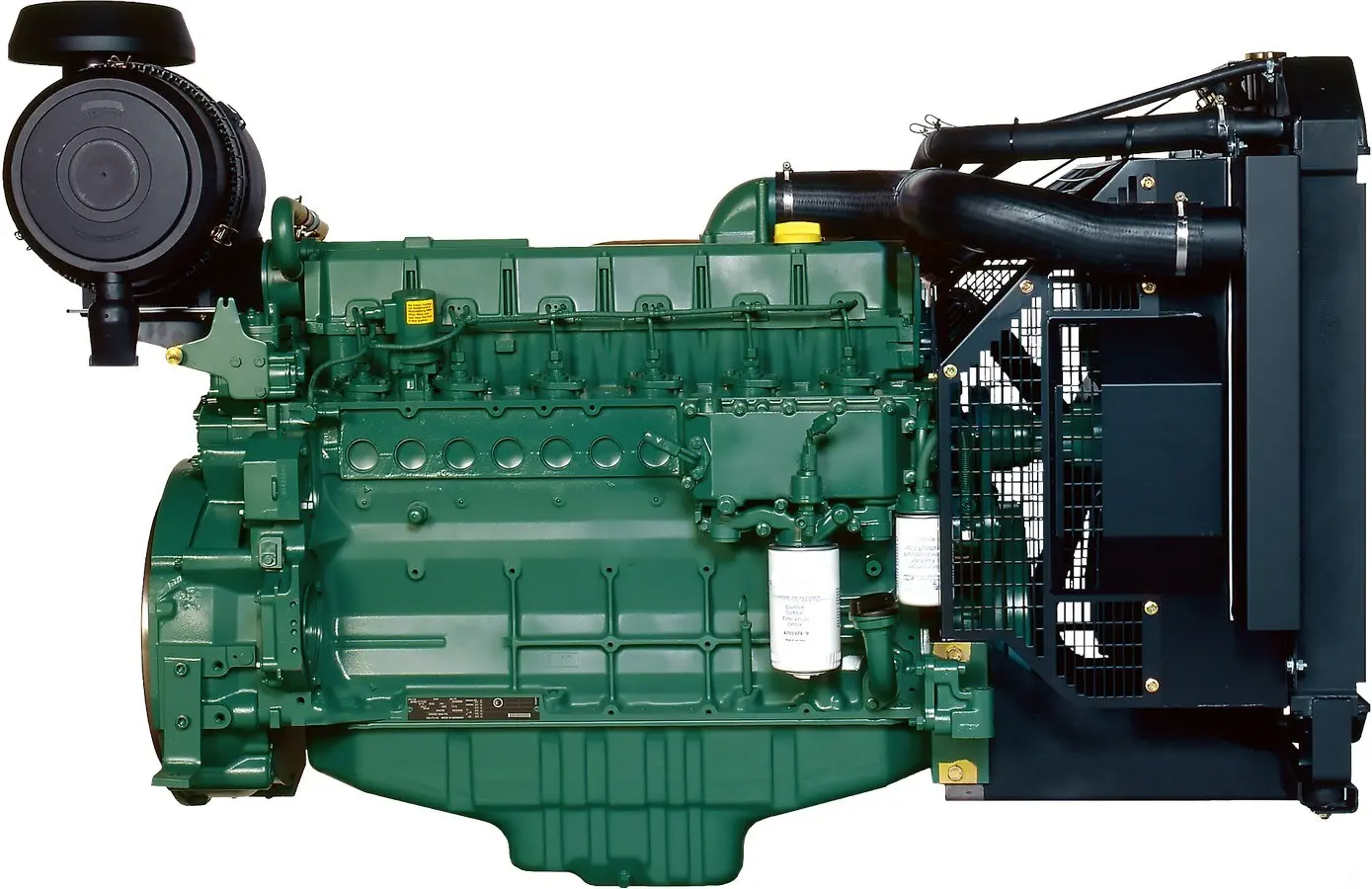
This article explains SCR system issues on Volvo Penta industrial engines and how tuning and removal improve reliability, reduce maintenance costs, and extend service life in generator and pump applications.
Read guide
[Explore all articles](https://volvodpfdelete.com/search/)