
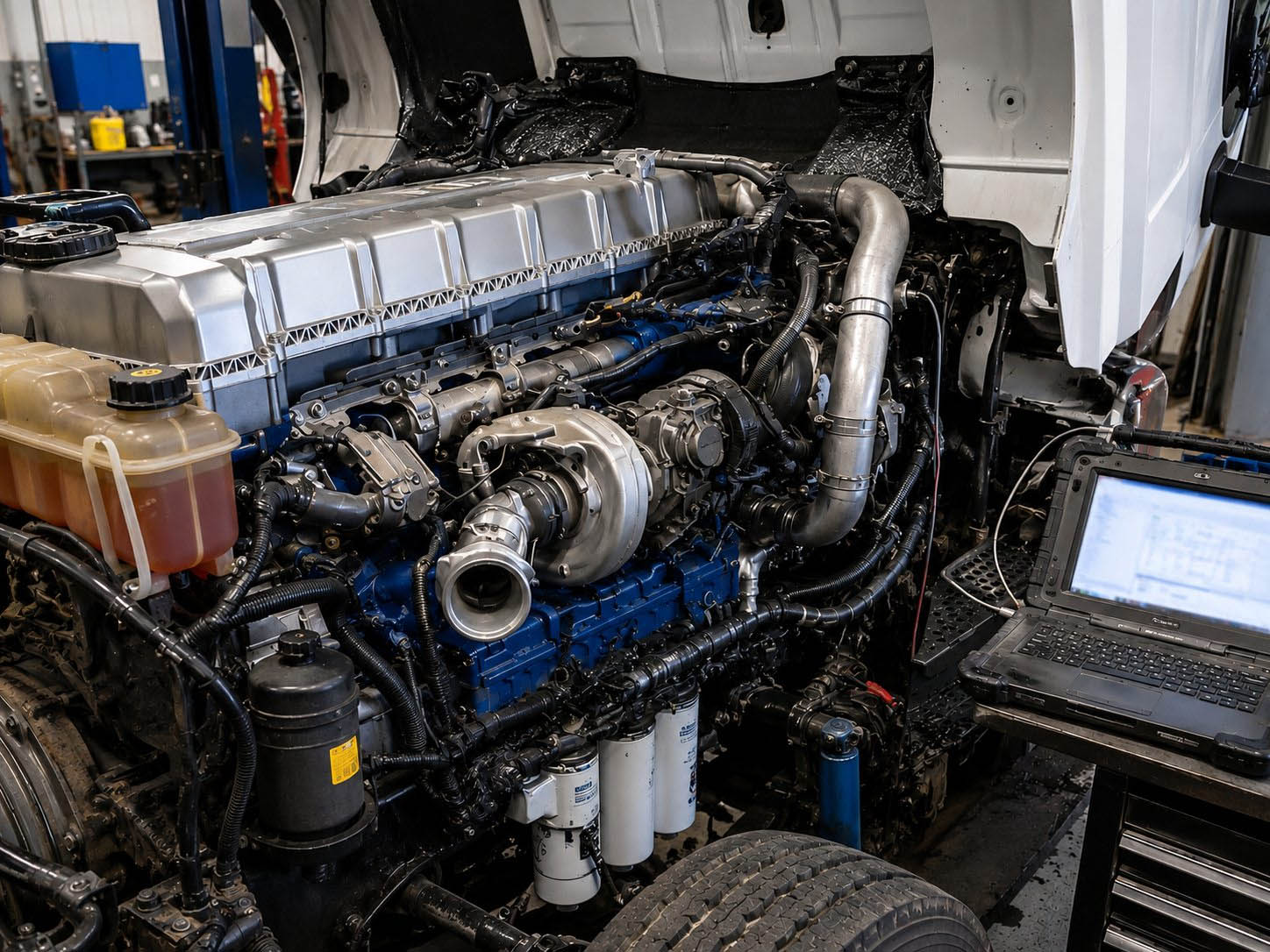
What are the most common Volvo D13 fault codes?

Learn what common Volvo D13 fault codes mean, the symptoms and possible causes behind them, and which diagnostic checks to consider before replacing parts. This guide covers turbo underboost, SCR and DEF issues, EGR flow, fuel pressure, misfires, and NOx sensor faults—and explains why multiple codes can appear together.
Volvo D13 engines provide hundreds of diagnostic trouble codes (DTCs), and though the number is large, the significant percentage of codes account for a large number of customer service calls outside the repair shop. Using current search patterns and experience from both the workshop and the technician, some of the most common Volvo D13 fault codes that are being investigated include P029900, P20EE00, P205B64, P042000, P040100, P008700, P030000, P030100, P220013, P207F00, and P207F9A.
These codes tend to be linked with the turbocharger, SCR/DEF aftertreatment system, EGR system, fuel pressure, catalyst efficiency, NOx sensors, and the performance of engine combustion. If left unresolved, many of them can lead to engine derates, reduced performance, higher fuel consumption, increased emissions, and expensive downtime. Although ECM codes are reported separately, they more often than not indicate symptoms of one of several potential problems common to multiple engine systems.
Common Volvo D13 Fault Codes Explained: P029900, P20EE00, P205B64, P042000, P040100 and More
Why We Decided to Cover These Volvo Fault Codes
If you own or operate a Volvo VNL, VNR, VHD, or any truck powered by a Volvo D13 engine, you've probably encountered at least one of these fault codes.
At DrunkLab, we regularly receive support requests related to Volvo engine codes such as P20EE00, P029900, P205B64, P207F00, P207F9A, and P040100. Many of these diagnostic trouble codes are searched hundreds of times every month by truck owners trying to understand why their truck suddenly entered derate mode, lost power, illuminated the check engine light, or began displaying DEF-related warnings.
The problem is that a fault code rarely tells the complete story. A single DTC can be triggered by several different mechanical, electrical, or software-related issues. Likewise, one failed component—particularly within the emissions system—can generate multiple fault codes simultaneously. When expensive components are replaced based on inactivity due to stored fault codes, repairs are often considered avoidable and do not actually solve the root problem.
This guide explains what these Volvo D13 fault codes mean, why they occur, how frequently they appear in real-world service, and what diagnostic steps should be performed before replacing major components.
Most Common Volvo D13 Fault Codes
Fault Code | Your Description (Translated) | Correct Technical Standard Description (Volvo / SAE) | Status / Notes |
P029900 | Insufficient boost pressure, turbo lag | Turbocharger/Supercharger "A" Underboost Condition | Accurate. Means low turbo boost pressure, actuator problems, or charge air leaks. |
P205B64 | DEF tank temperature sensor circuit fault | DEF Tank Temperature Sensor Circuit Range/Performance / Signal Plausibility | Accurate. Indicates a fault in the AdBlue tank temperature sensor signal or circuit. |
P20EE00 | "Dead" SCR / Low efficiency | SCR Catalyst Efficiency Below Threshold (Bank 1) | Accurate standard definition. Means the Aftertreatment system is not reducing NOx efficiently. |
P042000 | "Dead" catalyst | Catalyst System Efficiency Below Threshold (Bank 1) | Accurate standard definition for low catalyst performance. |
P008700 | Low fuel system pressure | Fuel Rail/System Pressure - Too Low | Accurate. Attributes issues to supply problems, filter or pump inject problems, or high pressure pump/injectors going bad. |
P030000 | Cylinder misfires (multiple) | Random/Multiple Cylinder Misfire Detected | Accurate. Shows multiple-cylinder combustion instability. |
P040100 | Insufficient EGR flow | Exhaust Gas Recirculation (EGR) Flow Insufficient Detected | Accurate. Points to a clogged EGR cooler/valve or restricted flow passages. |
P030100 | Cylinder 1 misfire | Cylinder 1 Misfire Detected | Accurate. Specific misfire isolated to cylinder #1 (injectors, valves, or compression). |
P220013 | NOx sensor electrical circuit open | NOx Sensor Circuit Open / Electrical Open Circuit (Bank 1 Sensor 1) | Accurate. Relates to wiring, connector, or internal failure of the upstream NOx sensor. |
P207F00 / P207F9A | Insufficient AdBlue (DEF) quality | Reductant Quality Performance / Poor DEF Quality | Accurate. Triggered when the system detects diluted, contaminated, or low-grade AdBlue/DEF fluid. |
Volvo Fault Code P029900
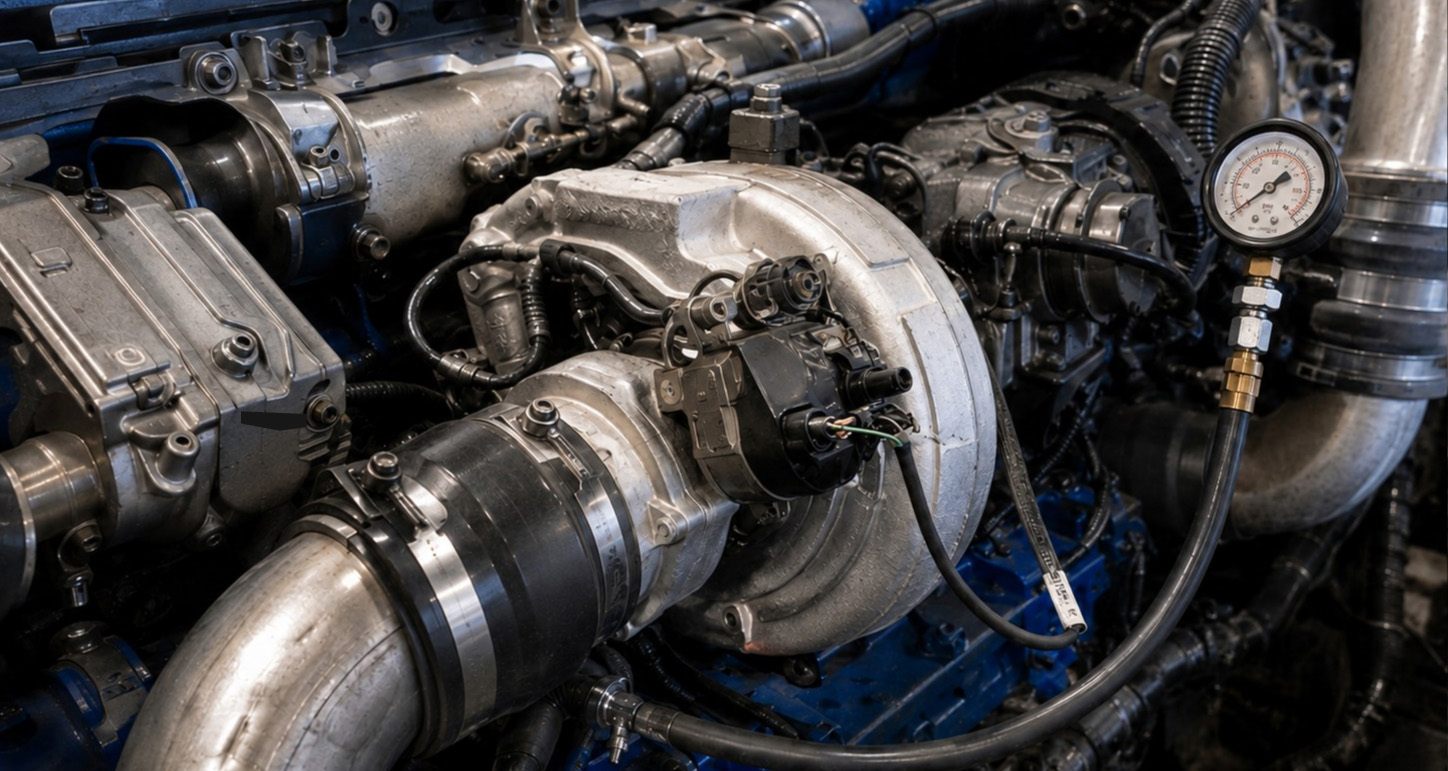
What does P029900 mean?
P029900 is a code indicating the turbocharger was underboost. In not so technical language, the ECM has an indication that the engine is not creating the boost pressure that is required in the current operating conditions.
In practice, this code is frequently associated with turbo lag during acceleration, particularly when boost leaks, sticking VGT vanes, charge-air restrictions, or exhaust leaks prevent the turbocharger from reaching the requested pressure. While many operators immediately suspect a failed turbocharger, the actual cause is often found elsewhere in the intake or exhaust system.
Common symptoms
Reduced engine power
Poor acceleration
Noticeable turbo lag
Increased fuel consumption
Check engine light
Possible engine derate
Common causes
Boost leaks
Damaged charge air cooler
Faulty turbocharger
Sticking VGT mechanism
Failed boost pressure sensor
Exhaust leaks
Charge-air piping leaks
Restricted air intake
How common is it?
P029900 is a Volvo D13 fault code that is reported fairly often, and is most commonly associated with higher mileage trucks, where the wear and tear on the turbochargers, the deterioration of the charge-air hoses, and various leaks in the intake become more widespread.
Possible solutions
Begin with a complete boost-pressure leak test before replacing the turbocharger. Inspect charge-air piping, intercooler connections, VGT operation, intake restrictions, and boost-pressure sensor readings. In many cases, correcting an air leak or resolving a sticking VGT mechanism eliminates the fault without requiring turbocharger replacement.
Volvo Fault Code P20EE00
What does P20EE00 mean?
P20EE00 means that SCR efficiency is less than the relevant setpoint configured in the ECM. To put this in driveable terms, the ECM is saying that adequacy of SCR aftertreatment to mitigate NOx emissions is not at a level that would allow the ECM to expect that the engine will operate in conformance with the emission standards that govern the operation of the engine.
Although this fault is often described simply as a "bad SCR catalyst," the catalyst itself is not always the root cause. The ECM evaluates overall NOx conversion efficiency using information from upstream and downstream NOx sensors. Inaccurate sensor readings, contaminated DEF fluid, wiring issues, DEF dosing problems, as well as other aftertreatment issues can be an indication that the P20EE00 fault is set.
Common symptoms
Check engine light
DEF warning messages
Progressive engine derates
Reduced vehicle speed
SCR system warnings
Common causes
Failed NOx sensors
DEF dosing problems
SCR catalyst deterioration
Poor-quality or contaminated DEF
Wiring issues
DEF injector restrictions
Software calibration inconsistencies
How common is it?
P20EE00 is one of the most searched Volvo D13 fault codes among specialist. It continues to be one of the leading causes of emission-related derates. It especially occurs along with DEF faults and quality issues, NOx sensor faults, and catalyst efficiency codes.
Possible solutions
Proper diagnosis should include verifying NOx sensor performance, checking DEF quality, inspecting the DEF dosing system, evaluating SCR catalyst efficiency, and confirming that the entire aftertreatment system is operating correctly before replacing major components.
Volvo Fault Code P205B64
What does P205B64 mean?
P205B64 means an electrical fault has occurred in a sensor in the circuit of the DEF tank temperature sensor. The ECM has determined that it is impossible for a valid, correct, or complete signal to be sent to the ECM by the temperature sensor in the DEF tank circuit. As a result, the ECM will not be able to monitor the temperature of the DEF tank.
Unlike a simple temperature reading outside the expected range, this code specifically points to a problem within the sensor circuit itself. Since DEF temperature plays an important role in SCR system operation—particularly during cold-weather starts—the ECM may limit aftertreatment performance until reliable sensor data is restored.
Common symptoms
DEF system warning messages
Check engine light
Potential engine derate
Cold-weather DEF system issues
SCR performance warnings
DEF heating system abnormalities
Common causes
Failed DEF tank temperature sensor
DEF header assembly failure
Damaged sensor wiring
Corroded electrical connectors
Open or shorted sensor circuit
Water intrusion into connectors
How often does it occur?
The Volvo D13 trucks with P205B64 have started to become more prevalent. One of the primary reasons has to do with how these trucks start to accumulate mileage. Some of the other reasons deal with how the electrical connections on the trucks start to lose contact and how the electrode assembly starts to corrode.
Possible solutions
First, look at the DEF header assembly and verify the sensor wiring and electrical connectors. Confirm continuity of the circuit and verify the operation of the sensor before performing any repairs. Since the temperature sensor is often integrated into the DEF header, replacement of the complete assembly may be required if the sensor itself has failed.
Volvo Fault Code P042000
What does P042000 mean?
P042000 shows that the catalyst efficiency is limited. The ECM has made a diagnosis about the performance of the aftertreatment catalyst. The analysis determines that the normal operating conditions of the vehicle do not allow the performance of the aftertreatment catalyst to be efficient.
Although P042000 is often confused with P20EE00, the two codes evaluate different aspects of the aftertreatment system. P20EE00 looks at the efficiency of SCR NOx conversion. P042000 looks at the overall performance of catalysts. A degraded catalyst substrate, an incorrect sensor reading, and continuous aftertreatment faults can all result in this diagnostic code.
Common symptoms
Emissions system fault messages
Check engine light
Potential engine derates
Reduced aftertreatment efficiency
Increased NOx emissions
SCR-related warning messages
Common causes
Catalyst aging
Catalyst substrate deterioration
NOx sensor inaccuracies
SCR system faults
DEF dosing problems
Exhaust leaks upstream of the catalyst
How common is it?
P042000 occurs less than P20EE00. However, it does occur more frequently than P042000 on trucks with a lot of miles and where the engine catalysts slowly begin to lose effectiveness. It may also appear with SCR and NOx sensor fault codes and a decline in NOx sensor effectiveness.
Possible solutions
A complete aftertreatment diagnosis should always be performed before replacing the catalyst. Test NOx sensor function and examine the DEF dosing system. Also, confirm exhaust temperatures are within the correct range. Finally, assess the efficiency of the SCR. The catalyst should be the source of the issue.
Volvo Fault Code P040100
What does P040100 mean?
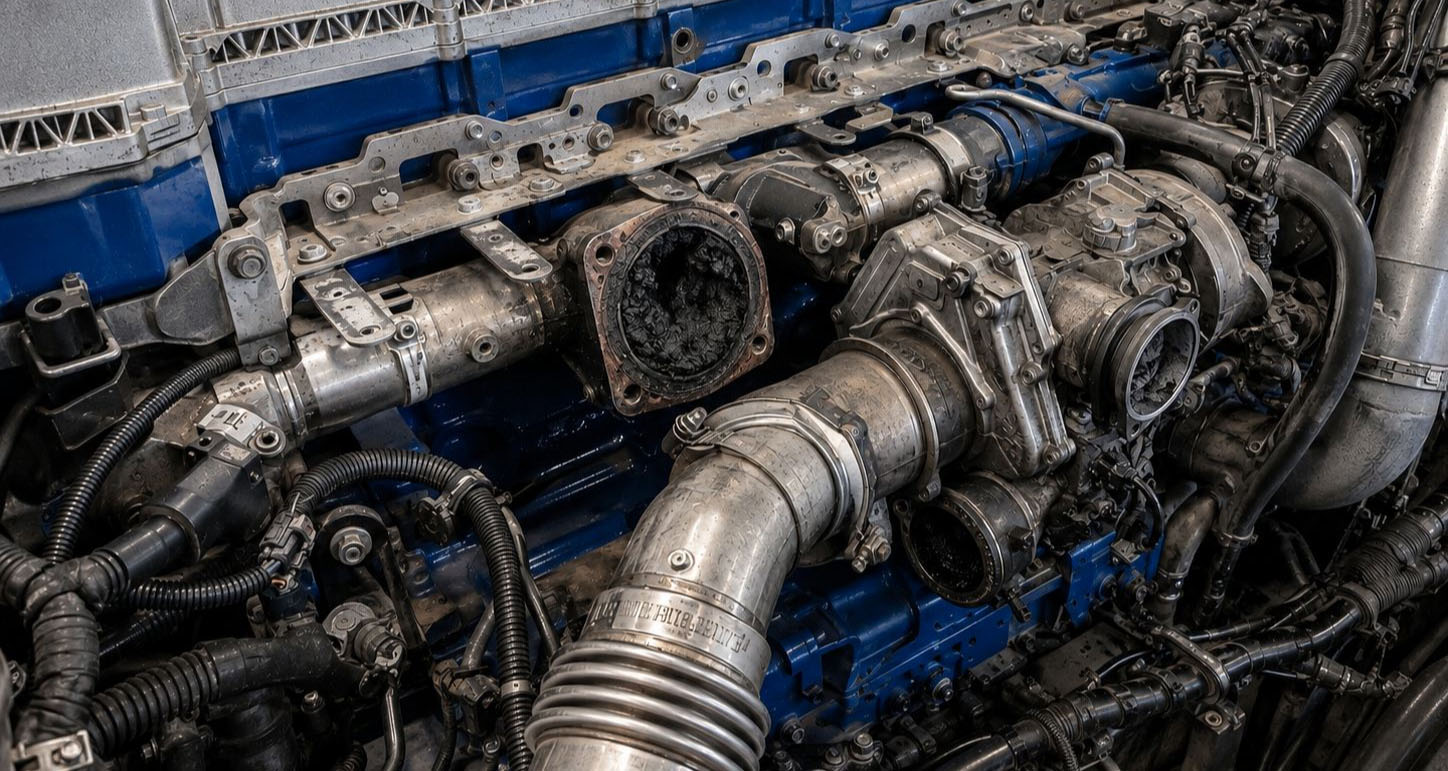
P040100 indicates an inadequate amount of Exhaust Gas Recirculation (EGR) flow. The ECM has indicated that the quantity of Exhaust Gas being recirculated does not agree with the quantity of Exhaust Gas being recirculated that the ECM expects based upon the current operating conditions of the Engine.
In many cases, the problem is not caused by the EGR valve itself. Carbon accumulation throughout the EGR system—including the valve, cooler, crossover piping, and differential pressure passages—is one of the most common real-world causes of this fault, particularly on high-mileage Volvo D13 engines.
Common symptoms
Rough engine operation
Increased soot production
Reduced fuel economy
Check engine light
Poor throttle response
Elevated exhaust temperatures
Common causes
Stuck EGR valve
Carbon buildup inside the EGR system
Restricted EGR cooler
Faulty EGR differential pressure sensor
Damaged sensor tubing
Wiring issues
Electrical connector faults
How common is it?
P040100 code is a Volvo D13 engine diagnosed by the common EGR related trouble code. Urban transport trucks are mostly susceptible due to the fastest EGR System carbon accumulation. Long periods of stop-and-go or idle conditions are the most damaging operating profiles for an EGR System.
Possible solutions
Inspect the EGR valve, EGR cooler, crossover piping, differential pressure sensor, and associated tubing for restrictions, excessive soot deposits, or mechanical failures. Proper EGR flow can be restored by simply cleaning carbon-contaminated components. Major component replacements become unnecessary. Electrical circuits and sensor operation should also be verified before replacing expensive EGR hardware.
Volvo Fault Code P008700
What does P008700 mean?
P008700 describes fuel rail pressure is insufficient compared to the ECM’s expected value. The engine management system is in charge of continuously checking the rail fuel pressure to make sure that the fuel is properly sprayed by the injectors and that the combustion is efficient. If the actual fuel pressure is below the calibrated value, the ECM sets a P008700 fault code, and may restrict engine power in order to protect the fuel system.
Although the fault often points toward a fuel delivery problem, the underlying cause may originate anywhere between the fuel tank and the high-pressure fuel rail.
Common symptoms
Hard starting
Loss of engine power
Poor acceleration
Check engine light
Engine hesitation under load
Possible engine shutdown
Engine derate in severe cases
Common causes
Restricted fuel filters
Weak fuel supply pump
High-pressure fuel pump wear
Fuel leaks
Low fuel pressure sensor faults
Air entering the fuel system
Fuel line restrictions
Potential consequences
Fuel pressure problems should never be ignored because they directly affect injector performance and combustion quality. Continued operation with insufficient fuel pressure may lead to difficult starting, poor engine performance, injector damage, and unexpected engine shutdown.
Possible solutions
Check fuel filters first, then check fuel supply pressure, the performance of the high-pressure pump, the leakage of injectors, and the accuracy of the sensors, before you replace any of the major components of the fuel system.
Volvo Fault Codes P030000 and P030100
What do these codes mean?
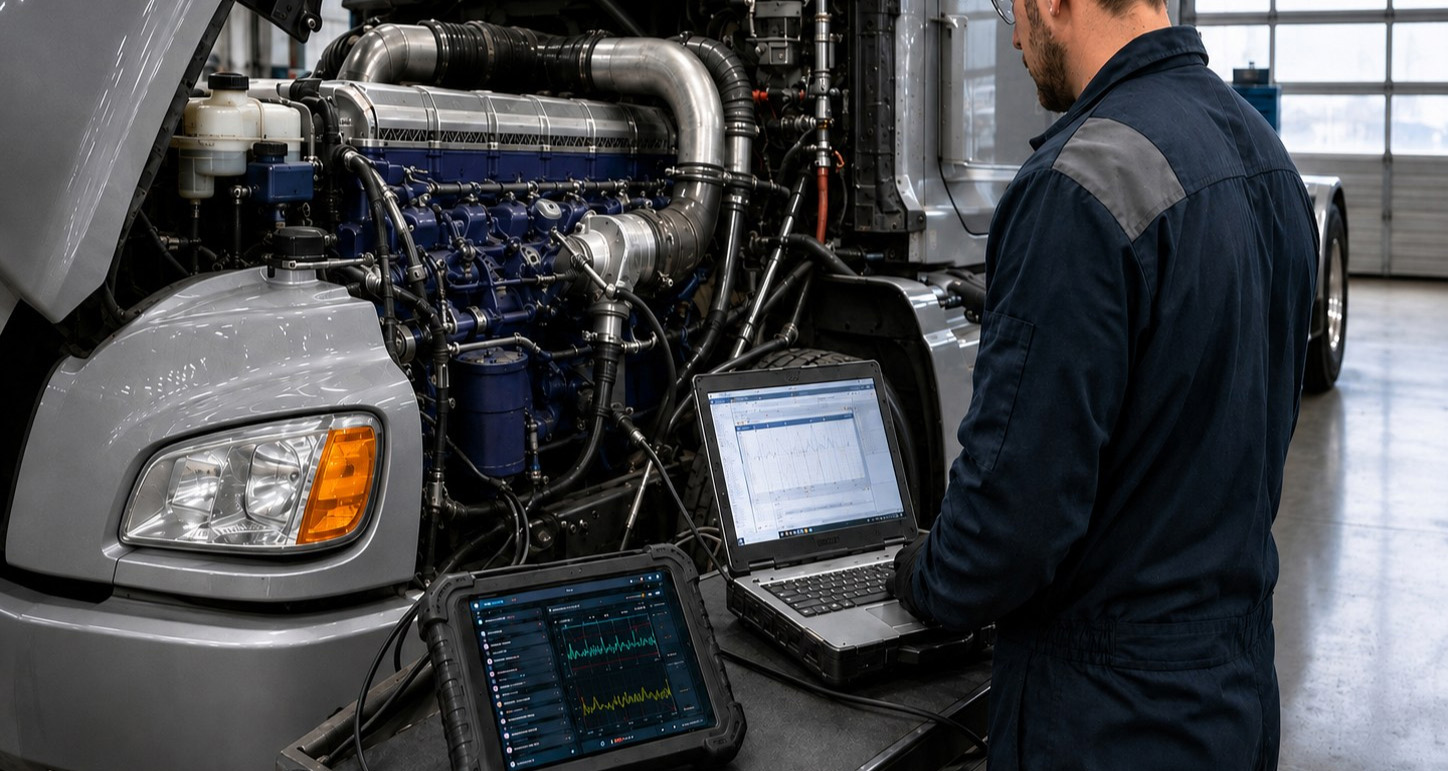
These diagnostic trouble codes indicate that the ECM has detected engine misfires during combustion.
P030000 typically corresponds to a random misfire or to multiple misfires from multiple cylinders. In such cases the ECM (Engine Control Module) cannot pinpoint the problem to a specific cylinder.
P030100 provides a unique case of a misfire found in Cylinder 1. This enables technicians to shorten the diagnostic process.
Although these codes are often linked to issues associated with fuel injection, they are also the result of the loss of compression, the presence of an electrical problem, the issue of fuel delivery, or an overall problem that pertains to the quality of combustion.
Common symptoms
Rough idle
Engine vibration
Reduced power
Increased fuel consumption
Hard starting
Check engine light
Excessive exhaust smoke under certain conditions
Common causes
Injector malfunction
Fuel delivery problems
Low cylinder compression
Valve train issues
Wiring faults
ECM driver faults
Air entering the fuel system
How common are these codes?
Misfire-related fault codes occur less frequently than emissions-system faults but can become increasingly common on higher-mileage engines where injector wear and fuel system degradation begin affecting combustion quality.
Possible solutions
Diagnosis should include injector balance testing, fuel pressure verification, compression testing, valve train inspection, and electrical testing before replacing injectors or engine components.
Volvo Fault Code P220013
What does P220013 mean?
P220013 is pointing to an issue relating to the NOx sensor circuit due to an electrical fault. Rather than simply reporting inaccurate emissions readings, the ECM has detected an abnormal electrical condition such as an open circuit, short circuit, loss of communication, or an implausible signal from the NOx sensor.
Modern Volvo D13 engines rely heavily on NOx sensor feedback to control SCR operation and verify emissions-system efficiency. Because the ECM continuously compares NOx levels before and after the SCR catalyst, a single electrical fault in the sensor circuit can affect multiple aftertreatment functions and eventually trigger additional emissions-related fault codes.
Common symptoms
Check engine light
SCR warning messages
DEF-related fault codes
Engine derate
Reduced emissions-system performance
Increased NOx emissions
Limited vehicle speed after progressive derates
Common causes
Failed NOx sensor
Open circuit in the NOx sensor wiring
Short circuit
Corroded electrical connectors
Sensor heater failure
CAN communication issues
SCR system faults affecting sensor operation
How common is it?
NOx sensor failures remain one of the most common emissions-related problems found on Volvo D13 engines. As trucks accumulate mileage, exposure to high exhaust temperatures, vibration, moisture, and road contaminants significantly increases the likelihood of sensor and wiring failures.
NOx sensors perform key functions in SCR diagnostics which is why P220013 often accompanies P20EE00, P042000, P207F00, or P207F9A. Therefore, when one of these components is due to be replaced, a complete diagnosis of the aftertreatment system must be performed first.
Possible solutions
Begin by inspecting the sensor wiring harness and electrical connectors for corrosion, broken wires, or damaged insulation. Verify sensor power supply, ground, communication circuits, and heater operation before replacing the NOx sensor. Verify appropriate operation of the SCR after repair and clear any related emission-system fault codes to prevent any secondary faults from being active.
Volvo D13 Fault Code P207F00
What does P207F00 mean?
P207F00 shows that the ECM has determined that the quality of DEF (Diesel Exhaust Fluid) is below the required specification, or that the SCR system cannot confirm the performance of DEF. The code points to the ECM not being able to verify the performance of DEF, not to a particular failed component. The DEF cannot achieve the expected level of reduction of NOx when it is sprayed into the exhaust stream.
Causes of P207F00 can include SCR efficiency, faulty NOx sensors, defective DEF dosing, and software balance. Ultimately, contaminated or diluted DEF is a frequent cause as well. The ECM ascertains the entire aftertreatment system, which allows the true cause of the problem to be beyond the DEF tank.
Common symptoms
Check engine light
DEF quality warnings
SCR fault messages
Engine derate countdown
Reduced vehicle performance
Increased NOx emissions
Limited vehicle speed if the fault remains active
Common causes
Contaminated DEF fluid
Incorrect DEF concentration
DEF tank contamination
Faulty DEF quality sensor
DEF dosing injector malfunction
Failed NOx sensors
SCR catalyst efficiency problems
Software or calibration inconsistencies
How common is it?
P207F00 is among the most ubiquitous DEF-related fault codes on the Volvo D13 engine. This code appears in conjunction with P20EE00, P205B64, and/or P220013 codes. They often appear with multiple codes in conjunction with the starting of the deterioration of multiple after-treatment system components.
Possible solutions
Verify DEF concentration and fluid quality before replacing components. Continue diagnosis by evaluating NOx sensor operation, DEF dosing performance, SCR catalyst efficiency, and related electrical circuits. Fixing the source error but leaving the code as is will usually result in the bug appearing again after multiple drives.
Volvo D13 Fault Code P207F9A
What does P207F9A mean?
P207F9A is a code that is related to the quality of DEF, which is a diagnostic trouble code that is found on Volvo D13, D11, and D16 engines, and on Volvo FH, FM, FE, VNL, VNR, and other supported platforms. The ECM has determined that DEF quality cannot be verified or that the SCR system is unable to achieve the expected emissions reduction despite normal operating conditions.
Although similar to P207F00, this code is often associated with extended SCR performance verification routines and may require several operating cycles before it clears after repairs have been completed.
Common symptoms
DEF warning lamp
Check engine light
SCR fault messages
Engine derate
Limited vehicle speed
Reduced aftertreatment efficiency
Common causes
Poor-quality DEF fluid
Water-contaminated DEF
DEF quality sensor issues
Failed NOx sensors
SCR catalyst deterioration
DEF dosing system malfunctions
Wiring or communication faults within the SCR system
How often does it occur?
P207F9A has become increasingly common on higher-mileage Volvo trucks. P210012 is McLaren’s way of saying “We don’t have enough data to make a determination.” P210012 will appear when P20EE00, P220013, or P205B64 are also present.
Possible solutions
Inspect DEF quality first, followed by the complete SCR system. Verify NOx sensor operation, dosing accuracy, DEF pressure, injector performance, and catalyst efficiency before replacing expensive emissions components.
Why SCR and DEF Fault Codes Often Appear Together
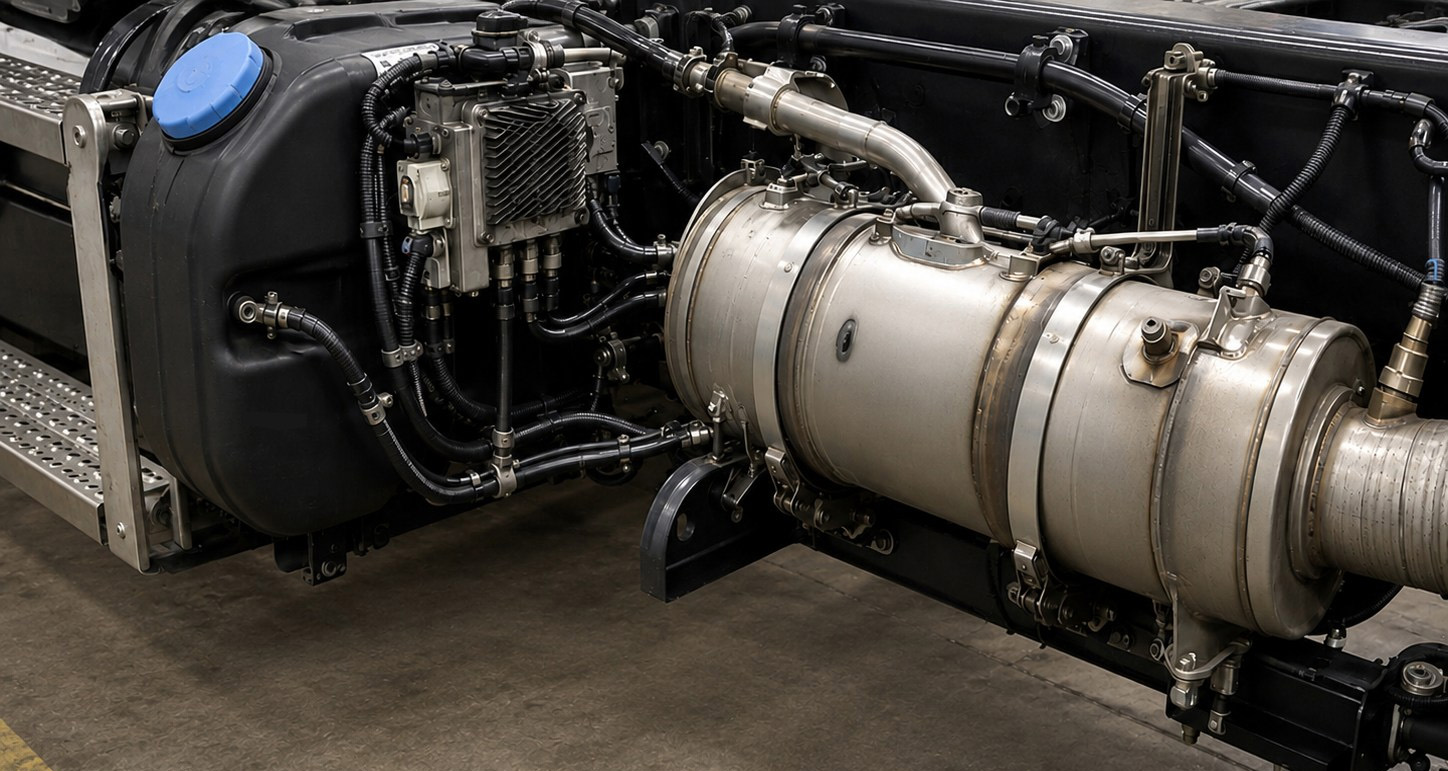
Volvo D13 diagnostics can be quite intricate, especially considering SCR and DEF fault codes often come bundled together. The aftertreatment system is built to be a self-containing network of sensors, control modules, dosing components, catalysts, and more, that monitors and interacts with each member of the network.
The ECM evaluates several parameters simultaneously, including:
DEF quality
DEF temperature
DEF dosing accuracy
NOx sensor readings
SCR catalyst efficiency
Overall NOx conversion performance
Because these systems depend on one another, a single failed component can trigger multiple diagnostic trouble codes.
For example:
A failed NOx sensor may eventually lead to P220013, followed by P20EE00 because the ECM can no longer accurately evaluate SCR efficiency.
Low-quality DEF may cause trouble code P207F00 or P207F9A. If low-quality DEF continues to be used, SCR Performance may degrade to the point trouble code P20EE00 is generated.
A faulty DEF tank temperature sensor linked to P205B64 can improperly manage DEF, especially in cold weather, and can cause additional aftertreatment issues.
Catalyst deterioration may initially show as P042000, but later on as NOx conversion efficiency continues to deteriorate, P20EE00 will result when the ECM detects that emissions are no longer meeting performance standards.
This is why replacing components based solely on a single stored fault code often leads to repeated repairs and recurring derates.
Diagnosis of the whole SCR and DEF system should be part of any complete assessment. This includes evaluation of NOx sensors, DEF quality, DEF dosing performance, catalyst efficiency, assessment of circuitry and ECM. The cost of a complete assessment is usually far less than the cost of multiple failed emissions component replacements if the root cause of the failure is identified later.
Why Do These Volvo D13 Fault Codes Keep Returning?
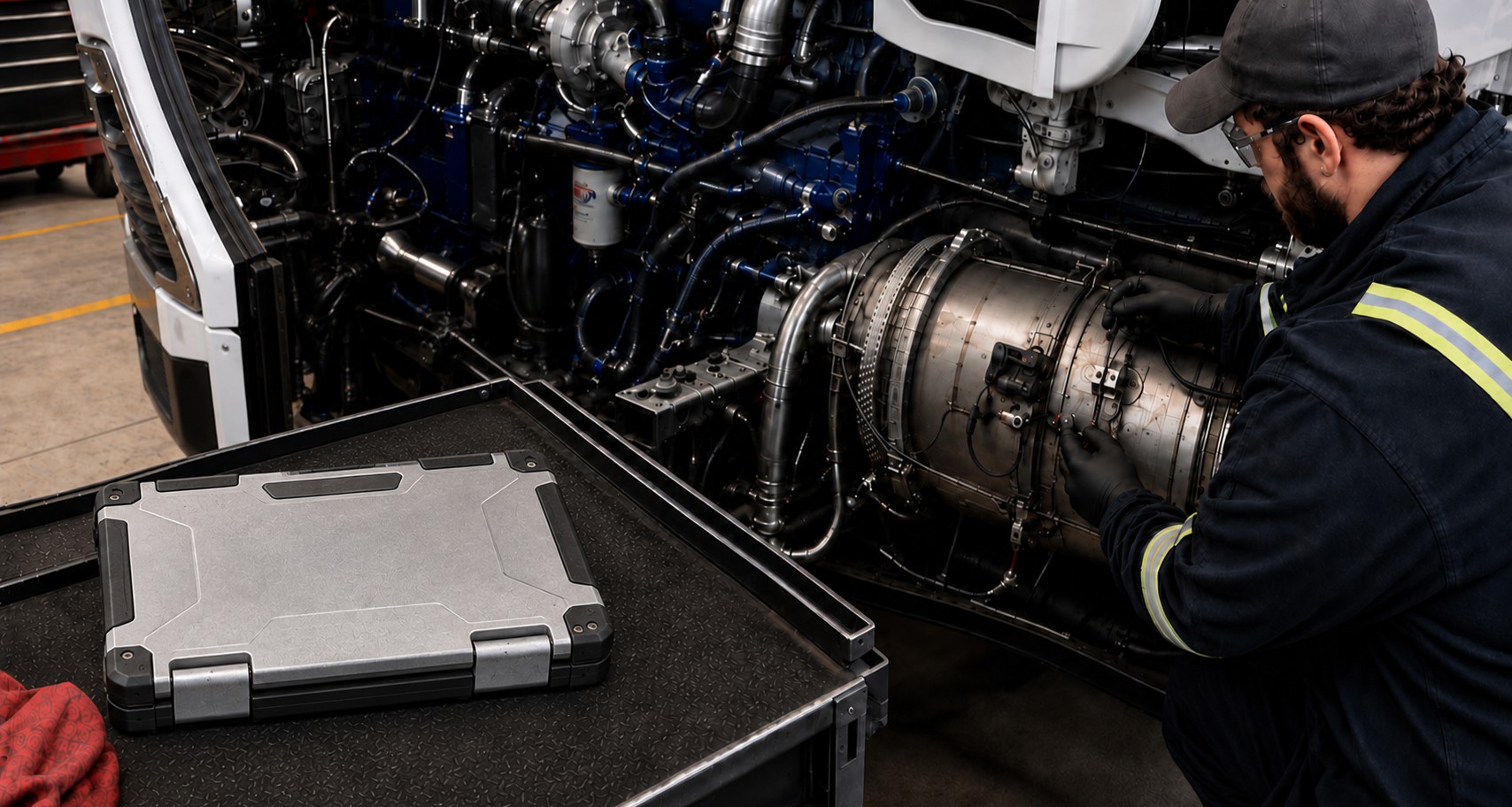
One of the biggest frustrations for truck owners is seeing the same fault code return shortly after repairs have been completed. In many cases, this happens because the stored DTC identifies only the symptom detected by the ECM—not necessarily the component that originally caused the problem.
Modern Volvo D13 engines perform round-the-clock monitoring of many systems with their turbocharger, fuel system and exhaust systems including EGR, SCR, DEF and NOx. Since these systems are highly integrated, even the simplest mechanical or electrical failure can cause multiple diagnostic trouble codes.
For example, the first indication of an aging NOx sensor may be a P220013. However, with poor emissions data, the ECM may conclude that SCR performance is no longer verifiable. In that case, the NOx sensor may also set P20EE00, P207F00, or P207F9A. The same is true for a simple boost leak where a P029900 may be set. However, if the boost pressure remains low, then prolonged operation will likely result in an increase in soot, worsening EGR and aftertreatment system issues.
Simply clearing fault codes or replacing parts based on the first stored DTC rarely resolves the underlying issue. The best repairs start with a thorough diagnostic evaluation that finds the primary cause instead of the first symptom that has occurred as reported by the ECM.
How DrunkLab Can Help
At DrunkLab, we specialize in Volvo engine diagnostics, ECU programming, emissions-system calibration, and advanced electronic troubleshooting. Our technicians are experienced with D13 engines, as they work on them every day and frequently identify issues with SCR, DEF, turbocharger control, EGR, fuel and engine electronics.
Using professional diagnostic equipment and years of practical experience, we help customers identify the actual source of recurring fault codes instead of replacing expensive components unnecessarily. Whether the issue involves intermittent electrical faults, aftertreatment performance, ECU software, or complex drivability problems, systematic diagnostics often reveal solutions that are not immediately obvious from the fault code alone.
Before owners conduct ECU programming or other emissions-related modifications, allowed in their jurisdictions, proper diagnostics should be completed. Addressing any existing issues with the vehicle’s systems first will increase the probability of stable engine performance.
FAQ
What is the most common Volvo D13 fault code?
There is no single "most common" fault code, but P20EE00, P029900, P205B64, P207F00, P207F9A, P040100, and P220013 consistently rank among the most frequently diagnosed Volvo D13 trouble codes. Most are related to the turbocharger or the emissions aftertreatment system.
Can I continue driving with these fault codes?
That depends on the specific code and its severity. Some faults may initially produce only a warning light, while others can quickly lead to progressive engine derates, reduced vehicle speed, increased fuel consumption, or further mechanical damage. Continuing to operate the truck without diagnosing the underlying problem is generally not recommended.
Can P205B64 cause an engine derate?
Certainly. The ECM depends on precise temperature readings of the DEF to control the SCR system. Therefore, an ineffective DEF tank temperature sensor and/or a problem with its circuit may result in SCR system faults and, in turn, cause progressive engine derate and/or emissions alerts, depending on the engine’s build, software version, and use conditions.
What is the difference between P20EE00 and P042000?
Both of these codes pertain to the aftertreatment system, however, these codes have their own unique functions.
P20EE00 references that the SCR NOx conversion efficiency has decreased and is no longer within the acceptable limits.
P042000 deals with overall catalyst efficiency. This could be caused by deterioration of the catalyst or issues with other aftertreatment performance.
Diagnosis will be complicated, as both codes will show the same symptoms, but the root cause will be different.
Can one problem trigger several Volvo D13 fault codes?
Yes. This is extremely common on modern Volvo engines.
For example:
A failed NOx sensor may trigger P220013, followed by P20EE00.
SCR efficiency faults may be caused by poor DEF quality which generates P207F00 or P207F9A.
Turbocharger underboost (P029900) can produce more soot, which can then impact both EGR and aftertreatment indirectly.
For this reason, technicians should always diagnose the complete system instead of component replacement due to a single fault code.
Does replacing the NOx sensor always fix P20EE00?
No. Defective NOx sensors are one of the most prevalent causes of P20EE00. However, they are not the only cause. Before replacing parts, DEF quality, SCR catalyst condition, dosing performance, wiring integrity and even software calibration have to be checked.
Can poor DEF fluid cause multiple fault codes?
Yes, DEF fluid that is dirty, diluted or the wrong fluid can cause P207F00, P207F9A and as the SCR efficiency drops below threshold P20EE00 as well.
What should be checked first before replacing expensive emissions components?
Always begin with the basics:
Read all active and inactive fault codes.
Verify DEF quality.
Examine electrical connectors and wiring
Check NOx Sensor
Confirm DEF Dosing Performance
If there are boost-related faults, check the turbocharger and intake system.
Confirm that fuel pressure and EGR operation are within specification.
A systematic approach to diagnostics is cost effective whereas replacing multiple emission components based on assumption is financially irresponsible.
Final Thoughts
D13 fault codes give insights on engine behavior. However, when diagnosing a problem, these codes should be used alongside other information. Modern Volvo engines utilize echoplex control systems. These systems integrate turbocharging, fuel injection, EGR, SCR, DEF, catalyst, and NOx. Each of these systems affect the others.
Understanding what a fault code actually represents—and what it does not—is the key to avoiding unnecessary repairs and reducing vehicle downtime. Accurate diagnostics when working with codes P029900, P20EE00, P205B64, P042000, P040100, P008700, P030000, P030100, P220013, P207F00, P207F9A, or others, should focus on the actual problem rather than guessing and replacing parts or clearing codes.
By having a more organized way of diagnosing issues, technicians can identify problems quicker, reduce costs on the repairs, allow the equipment to work properly again, and stop the previous fault codes from reappearing.
By Michael Carter
Independent Technical Writer
Last updated: August 06, 2026
Review
You can leave a review on the contact page.
Related Articles
Mochester App (M4 App) for Volvo Construction Equipment: Smart Diagnostics and Tuning Made Easy
Remote tuning solutions for Volvo construction machines are available through the Mochester App (M4 App). This guide outlines the App's primary functions and how to use it to enhance the performance of your machines, minimize their downtime, and better their fuel efficiency.

Volvo Construction Equipment Software: Solutions for Diagnostics and Tuning
Modern Volvo Construction Equipment depends on sophisticated electronic systems that use software for diagnostics and optimization. This article analyzes the most common tools such as Volvo Tech Tool, VCADS Pro, Jaltest, and Mochester App, and their functions regarding fault identification, ECU programming, and system calibration. Other tuning options including performance optimization as well as DPF, EGR, and SCR deletes are discussed. Overall, correct application of these tools and techniques can help minimize production downtime, enhance operational efficiency, and prolong the natural working life of Volvo CE equipment.

Volvo Construction Equipment Fault Codes List: Overview of Common Errors and Their Meanings
A practical overview of common Volvo CE fault codes, how to read them, and what they mean for diagnostics and repair.