
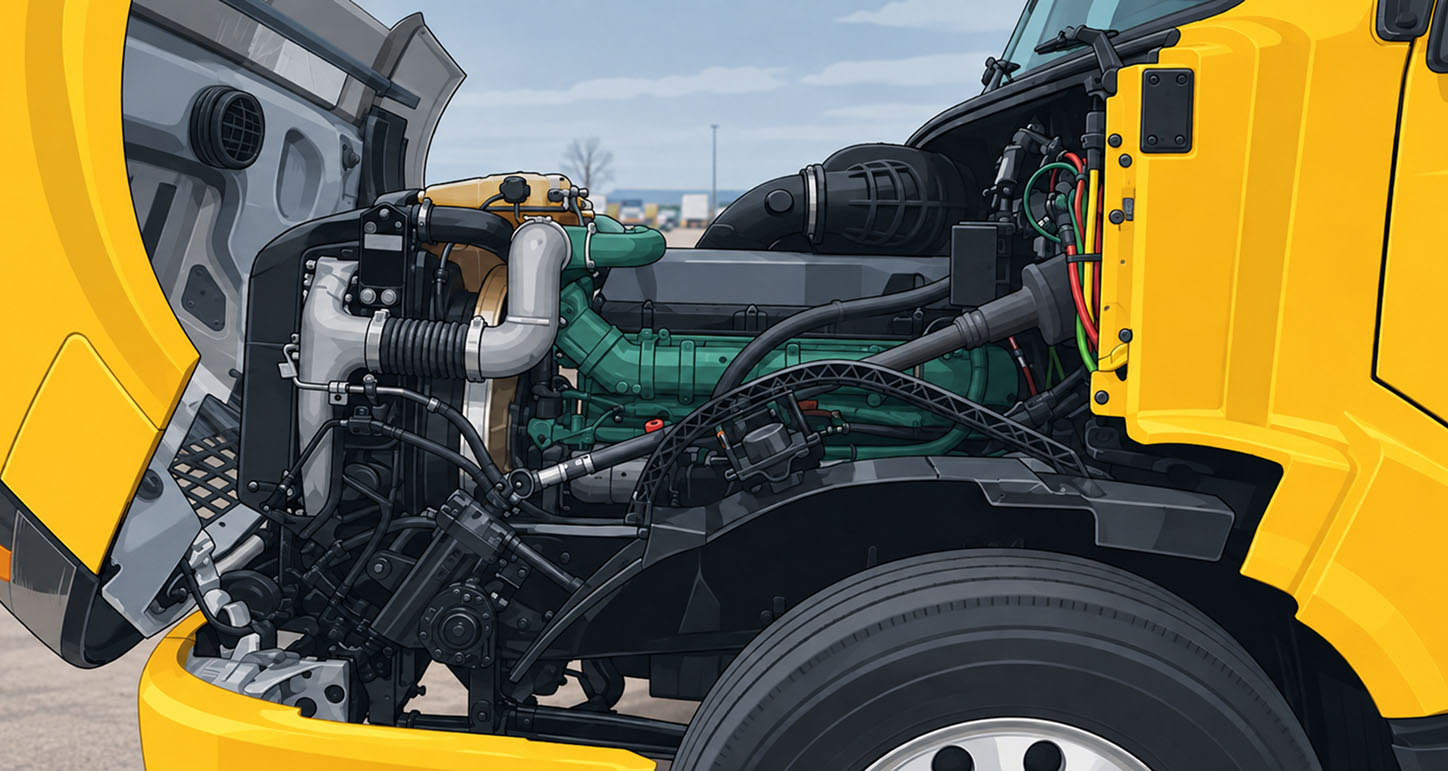
Volvo Hydrocarbon Doser (7th Injector) Faults: Why DPF Temperature Fails to Rise During Regen

Why does Volvo DPF regeneration start but the temperature is low?
One possible cause may be the aftertreatment hydrocarbon doser. This is commonly known as the 7th injector. If the doser cannot meter the fuel into the exhaust stream, the aftertreatment system may not be able to generate enough heat for regeneration. Other possible causes include low doser fuel pressure, restricted fuel lines, a faulty dosing module, temperature-sensor problems, exhaust leaks, or other engine and aftertreatment faults.
What should I perform before replacing the 7th injector?
Start with the diagnostic trouble codes (DTC) and live data. Check hydrocarbon doser fuel pressure, fuel-line condition, regeneration temperature, temperature-sensor readings and the operation of the dosing system. If fault seems to be with the doser, check the injector for contamination or blockage and make sure it is working before replacing any expensive components.
What Is the Volvo 7th Injector?
The Volvo 7th injector, also known as the hydrocarbon doser (HC doser) or aftertreatment hydrocarbon injector, is part of the exhaust aftertreatment system.
Unlike the six engine fuel injectors on a D13, the 7th injector does not inject fuel into a cylinder.
Its job is to introduce fuel into the exhaust system during specific aftertreatment operations. That fuel is used to create additional heat in the exhaust system and help bring the DOC/DPF system to the temperature required for regeneration.
This is why the 7th injector becomes especially important when a truck reports a regeneration temperature problem.
If the system requests regeneration but cannot generate sufficient temperature, the HC doser is one of the first components that should be investigated.
Volvo diagnostic documentation identifies the aftertreatment hydrocarbon doser, its fuel pressure and associated dosing system as possible causes when the required aftertreatment temperature cannot be achieved or regeneration is not possible.
IMPORTANT: A low DPF regeneration temperature does not automatically prove that the 7th injector is defective. Diagnose fuel pressure, lines, dosing controls and temperature feedback before replacing the injector.
How the 7th Injector Helps Heat the DPF
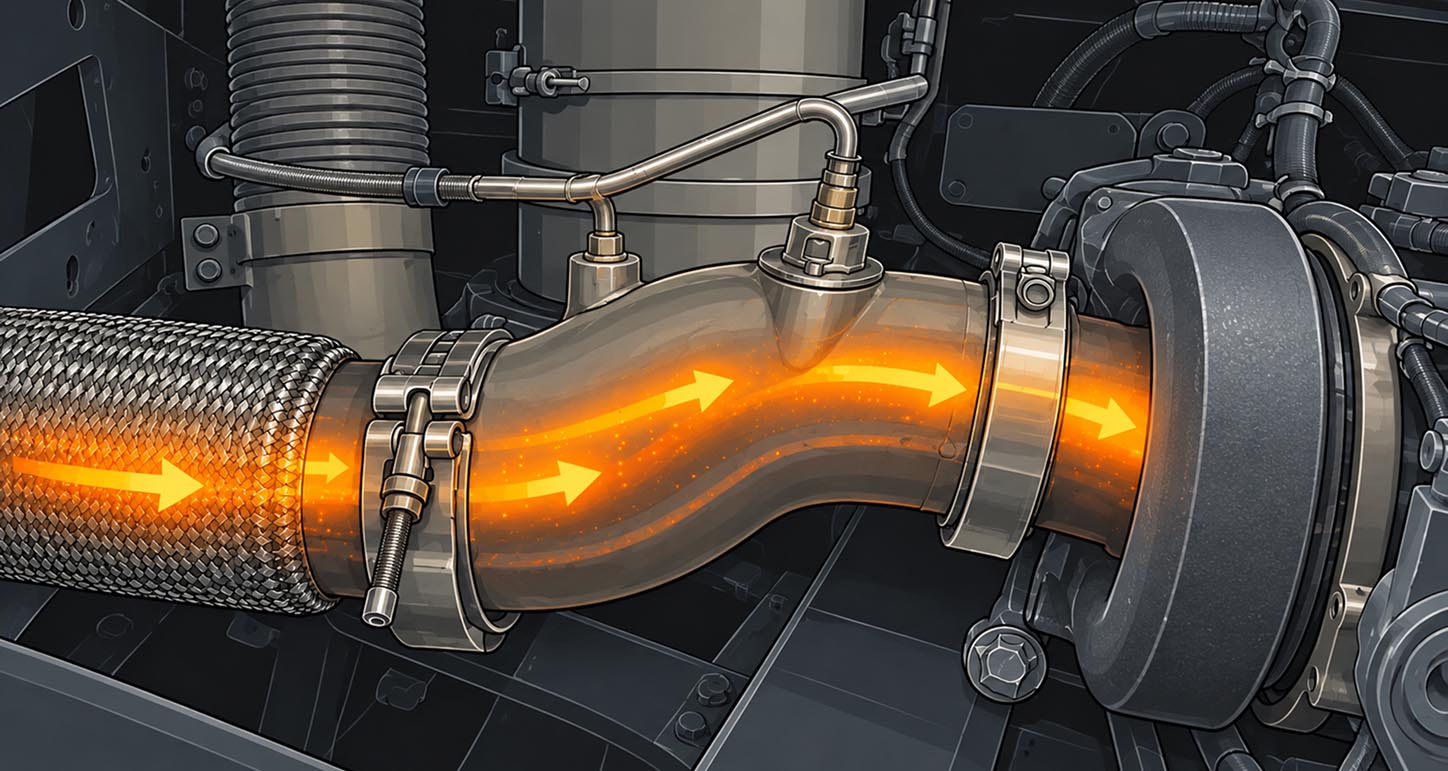
During an active regeneration, the engine and aftertreatment system must create conditions that allow accumulated soot to oxidize.
The 7th injector contributes by supplying fuel into the exhaust stream upstream of the aftertreatment components.
The basic sequence is:
Regeneration requested → HC doser activated → fuel introduced into exhaust → exhaust temperature rises → DPF regeneration continues
If the fuel is not delivered correctly, the temperature may remain below the required level.
The result can be a familiar diagnostic pattern:
Regen starts → temperature remains low → regeneration stops → DPF soot load remains high → another regen is requested
This is one reason a truck can appear to have a DPF problem when the actual fault is in the fuel-dosing system.
Volvo diagnostic information specifically lists an obstructed or dirty hydrocarbon doser, low or excessive doser fuel pressure, fuel-line problems and dosing-module faults among conditions associated with unsuccessful regeneration.
Volvo DPF Regen Temperature Too Low
One of the most important symptoms is: Regen Stopped: Low DOC Temperature
The exact wording can vary depending on the truck, software version and diagnostic tool, but the principle is the same: the aftertreatment system expected the temperature to increase, but the measured temperature remained too low.
Volvo has documented DPF regeneration faults including P24A0 - Closed Loop DPF Regeneration Control at Limit – Temperature Too Low and P249F - Excessive Time to Enter Closed Loop DPF Regeneration Control.
These codes do not automatically mean that the HC doser itself has failed.
The diagnostic process should determine whether the problem is:
Insufficient fuel delivery
Low HC doser fuel pressure
Restricted fuel line
Clogged doser
Dosing-module problem
Faulty temperature sensor
Exhaust leak
Another engine or aftertreatment problem
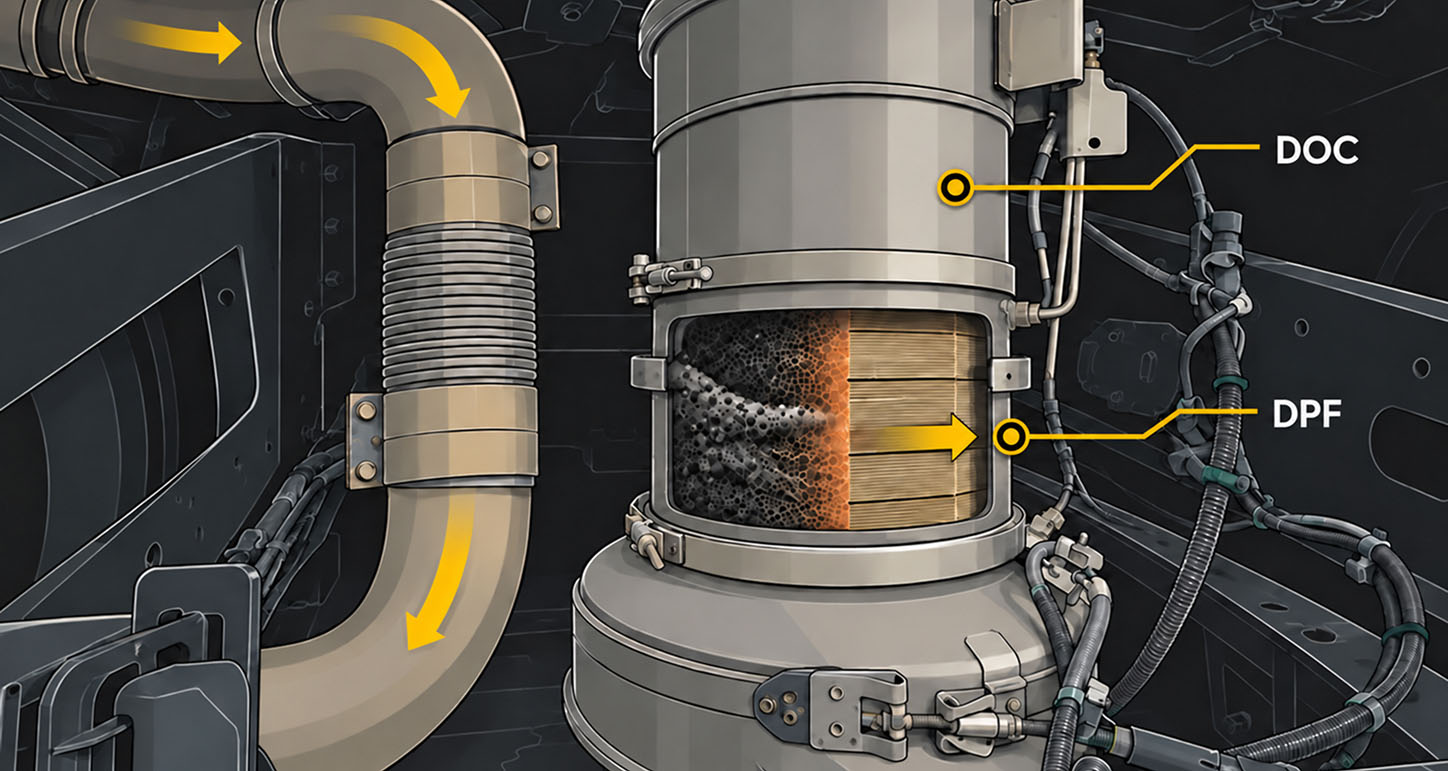
1. Volvo HC Doser Fault: Start With the DTCs
Before removing the 7th injector, read the active diagnostic codes.
One particularly relevant Volvo fault family is:
SPN 5443 - Aftertreatment 1 Hydrocarbon Dosing System
Volvo diagnostic information associates different FMI conditions with problems including fuel pressure, fuel lines, an obstructed or dirty hydrocarbon doser and the aftertreatment hydrocarbon dosing module. These conditions can result in regeneration being unavailable.
For example:
Fault area | Possible indication |
HC doser fuel pressure | Pressure outside expected range |
Fuel line | Restriction or delivery problem |
HC doser | Obstructed or dirty |
Dosing module | Mechanical or control problem |
Fuel shut-off valve | Valve problem |
Pressure sensor | Incorrect pressure feedback |
Air supply | Insufficient air pressure on applicable systems |
Older Volvo diagnostic documentation also lists SPN 3480 for aftertreatment DPF fuel pressure and identifies conditions such as air in the fuel system, fuel-filter problems, the aftertreatment fuel pump, fuel shut-off valve and HC doser as possible causes of regeneration problems.
DID YOU KNOW?
A fault in the HC dosing system can prevent regeneration even when the DPF itself is physically capable of being regenerated. In other words, the filter may not be the component that needs replacement.
2. Volvo 7th Injector Clogged: The Most Direct Mechanical Problem
One of the simplest failures is also one of the most common things to check:
The 7th injector is contaminated or clogged.
can accumulate around the injector and its сarbon and combustion-related deposits outlet.
If the nozzle is restricted, the doser may not deliver fuel correctly into the exhaust stream.
Possible symptoms include:
Regen temperature is too low.
Regeneration takes too long.
Regeneration stops before completion.
DPF soot level continues increasing.
Repeated regeneration requests.
Active HC dosing faults.
Regeneration unavailable.
Volvo service information for hydrocarbon doser-related faults instructs technicians to remove and inspect the HC fuel doser and, when it is plugged, replace the dosing valve and clean the relevant port before verifying the repair.
This is an important point:
Do not automatically replace the entire dosing system when the actual restriction is at the injector or its port.
3. Check the Fuel Supply Before Blaming the Injector
A 7th injector can be perfectly functional while receiving insufficient fuel.
That is why Volvo D13 7th injector fuel pressure should be part of the diagnosis.
Check:
Fuel pressure commanded by the dosing system.
Actual fuel pressure where available through diagnostic data.
Fuel pressure sensor readings.
Fuel lines.
Fuel filter condition.
Fuel shut-off valve.
Aftertreatment fuel pump.
Evidence of air in the fuel system.
Volvo diagnostic information specifically identifies aftertreatment hydrocarbon doser fuel pressure too low and fuel-line problems as possible reasons regeneration is not possible.
Why low pressure matters
The injector cannot create the correct spray pattern if the fuel supply is inadequate.
This means:
Low fuel pressure → insufficient dosing → insufficient heat → low DOC/DPF temperature → failed regeneration
Replacing the 7th injector without checking the supply system may therefore result in an unnecessary repair.
4. Check the Fuel Shut-Off and Dosing Module
The HC doser does not operate in isolation.
The fuel control and fuel supply systems may require additional components that help regulate system pressure and the delivery of fuel.
A Volvo diagnostic fault can therefore point toward the dosing system even when the injector itself is not physically blocked.
Possible causes include:
Fuel shut-off valve malfunction
Dosing module fault
Pressure-sensor fault
Fuel pump problem
Restricted line
Air in the fuel system
Electrical or wiring problem
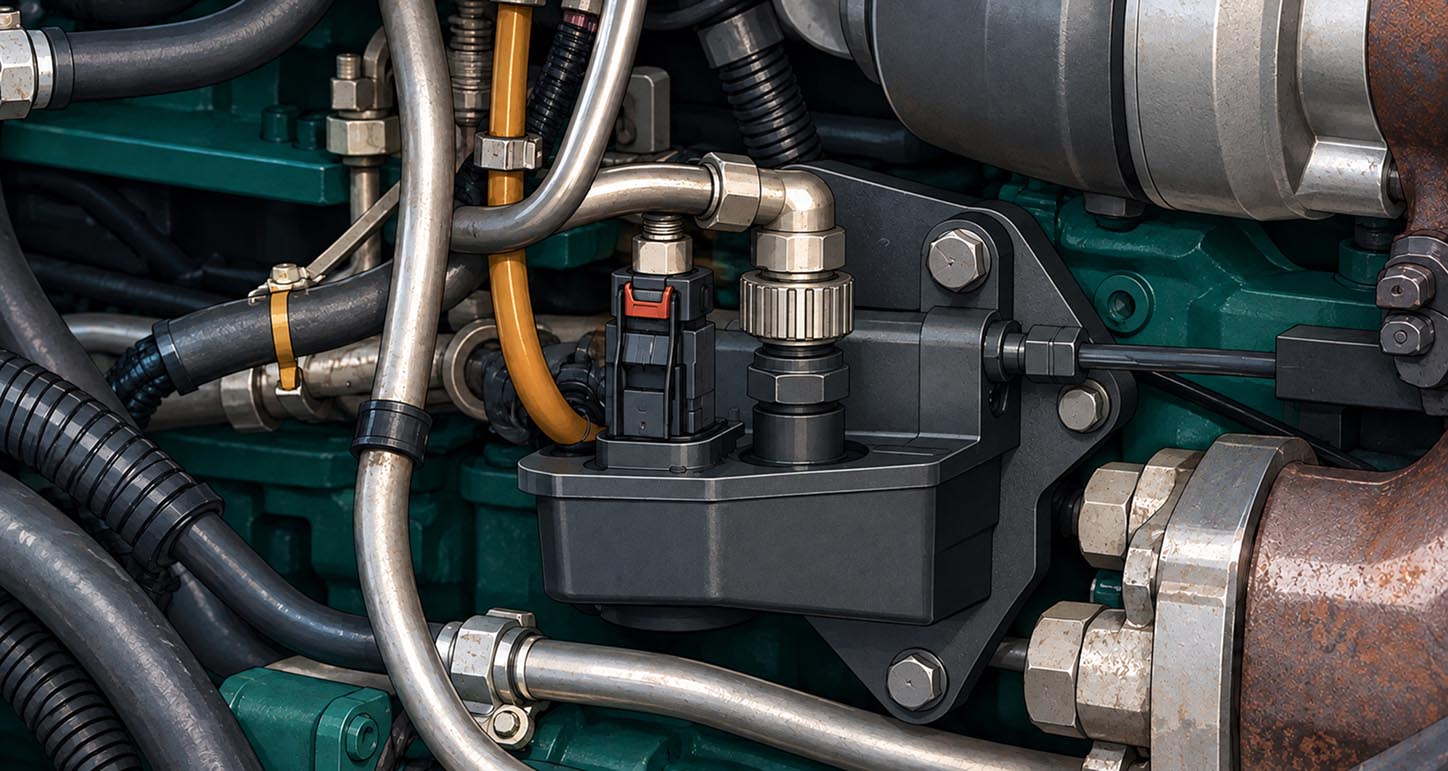
For example, Volvo documentation for the aftertreatment fuel pressure system identifies the fuel shut-off valve, pressure sensor, fuel pump, fuel lines and hydrocarbon doser among possible causes of incorrect fuel pressure.
5. Check the Temperature Sensors Before Replacing the Doser
A regeneration can fail because the system actually has low temperature.
But it can also appear to have low temperature because the sensor is reporting the wrong value.
This distinction is critical.
If the ECM receives an implausible temperature reading, it may determine that the regeneration conditions have not been achieved.
Therefore, compare the available temperature sensors and live data.
Look for:
DOC inlet temperature.
DOC outlet temperature.
DPF inlet temperature where applicable.
DPF outlet temperature where applicable.
Temperature increase after dosing begins.
Volvo service information has diagnostic procedures that use DOC inlet and outlet temperature readings during an aftertreatment regeneration to determine whether the problem is associated with the doser block or temperature sensor.
A useful diagnostic principle
If fuel dosing is commanded but the temperature does not respond, investigate the entire chain:
Fuel supply → dosing pressure → injector → fuel spray → exhaust temperature → temperature sensor
Do not stop at the first component that produces a fault code.
6. How to Inspect a Volvo 7th Injector
If diagnostic data points toward the HC doser, the injector itself should be inspected.
Before working on the exhaust system, allow the components to cool and follow the applicable Volvo service procedure and safety requirements.
The general inspection sequence is:
Step 1 - Locate the HC doser
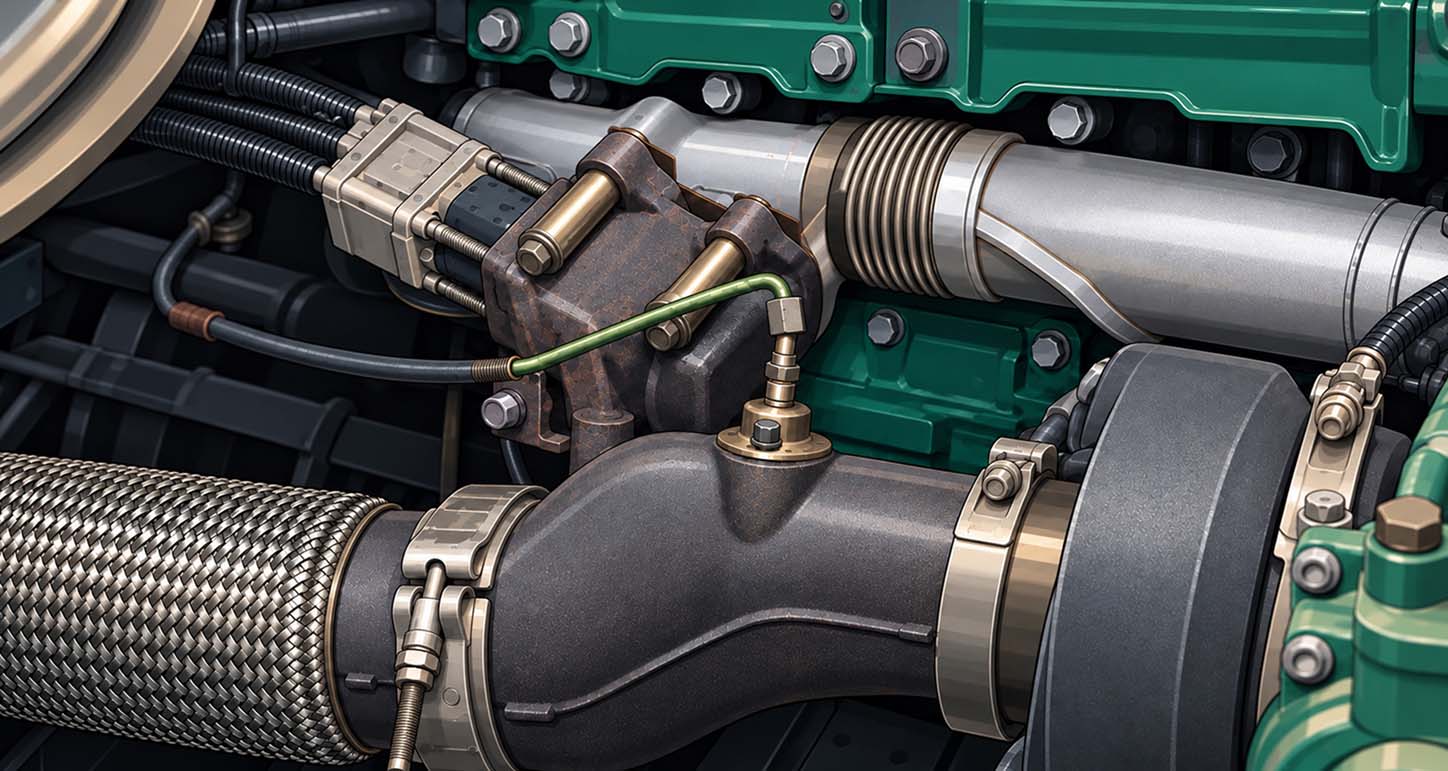
On applicable Volvo D13 configurations, the hydrocarbon doser is installed in the exhaust system upstream of the aftertreatment components.
Volvo service documentation for D13/D16 applications describes removing the HC doser from the diffuser pipe connected to the turbocharger outlet.
Step 2 - Inspect the injector tip
Look for:
Carbon deposits.
Soot accumulation.
Coking.
Obvious blockage.
Physical damage.
Step 3 - Inspect the dosing port
The injector may be clean while the exhaust-side port is restricted.
Check the port and surrounding area for a deposits.
Step 4 - Check the fuel connection
Signs to look for:
Contamination.
Fuel leaks.
Damaged fittings.
Restricted lines.
Evidence of air entering the system.
Step 5 - Inspect electrical connections
Please verify the connector and the harness for the following:
Corrosion.
Loose terminals.
Damaged wiring.
Heat damage.
7. Volvo 7th Injector Cleaning: When Is It Appropriate?
If the injector is visibly contaminated, cleaning may be considered depending on the specific component and Volvo service instructions for that application.
However, cleaning should not automatically be treated as a permanent repair.
A mechanically damaged injector, severely restricted injector or component that fails the manufacturer's functional test may need replacement.
Volvo service information provides cases where a plugged HC doser should be replaced and the dosing port cleaned.
What should you NOT do?
Avoid aggressive mechanical cleaning of the injector nozzle that can damage the calibrated spray outlet.
The objective is not simply to make the injector look clean.
The objective is:
Correct fuel delivery + correct spray pattern + correct temperature response
8. Checking the Spray Pattern
The spray pattern is one of the most useful physical checks when contamination is suspected.
A healthy doser should deliver fuel in the intended manner rather than:
Dribbling.
Leaking continuously.
Spraying unevenly.
Producing an obviously restricted stream.
Remaining completely dry when dosing is commanded.
However, fuel testing should be performed using the correct Volvo diagnostic procedure and suitable equipment.
Do not improvise a test that sprays diesel onto a hot exhaust component.
The exhaust system can reach extremely high temperatures during regeneration, creating a serious fire and burn hazard.
IMPORTANT: Never perform an improvised open-air fuel spray test around a hot exhaust system. Perform the manufacturer's recommended diagnostic test method, or use a controlled test method, if no other option exists.
9. Fuel Line Bleed: Why Air in the System Matters
Another hypothesis for low dosing performance is air in the fuel system.
If the fuel supply to the HC doser has been opened during repair, replacement or service, the system may need to be properly primed or bled according to the applicable procedure.
Air can cause:
Unstable fuel pressure.
Insufficient dosing.
Incorrect pressure feedback.
Failed regeneration.
Repeated dosing-related DTCs.
Volvo diagnostic information specifically identifies air in fuel as a possible cause of incorrect aftertreatment fuel pressure on applicable systems.
Fuel Line Bleed procedure
The exact bleeding procedure depends on the Volvo engine, emissions level, chassis and dosing-system configuration.
Therefore, use the applicable Premium Tech Tool (PTT) guided procedure rather than applying one generic bleeding sequence to every D13.
After opening the fuel system, the general diagnostic logic is:
Repair → prime/bleed fuel system → verify fuel pressure → command service regeneration → monitor dosing and temperature
Volvo's service instructions for HC doser replacement direct the technician to start a service regeneration after installation and verify the system when fuel dosing begins, including checking for leaks on the hot side of the engine.
10. Verify the Repair With PTT
After cleaning or replacing the 7th injector, the repair should not be considered complete simply because the old DTC has been cleared.
Use PTT to verify:
Active DTC status.
HC doser operation.
Fuel pressure.
Regeneration status.
Exhaust temperature.
DPF soot load.
Temperature response during dosing.
Volvo service instructions specifically call for starting a service regeneration after HC doser installation and checking for leaks when fuel dosing begins.
Clear the codes only after the repair
If the underlying fault remains, the DTC will normally return when the corresponding monitor runs again.
A proper sequence is:
Repair → clear applicable DTCs → run the required diagnostic test/regeneration → monitor live data → confirm that the fault does not return
11. Volvo 7th Injector Replacement: When Is It Necessary?
Replacement makes sense when the HC doser:
Is physically damaged.
Remains obstructed after appropriate service.
Fails the applicable functional test.
Cannot provide the required fuel delivery.
Has an internal mechanical fault.
Continues generating a relevant fault after the fuel supply and control system have been verified.
Volvo service documentation for DPF-related faults provides an example where a plugged HC doser is replaced and the port is cleaned before performing a regeneration to verify the repair.
Do not replace the injector simply because the DPF temperature is low.
First establish whether the problem is actually:
Doser → fuel pressure → fuel line → dosing module → temperature sensor → exhaust condition
12. Common Volvo 7th Injector Fault Patterns
Symptom | Possible cause | What to check |
Regen temperature too low | Insufficient fuel dosing | Doser pressure and fuel delivery |
Regen starts but stops | Dosing failure | HC doser and dosing system |
HC doser fault | Mechanical restriction | Injector and dosing port |
Fuel pressure too low | Supply problem | Fuel lines, pump, valve, filter |
Fuel pressure too high | Control problem | Shut-off valve, pressure sensor, dosing module |
DPF remains heavily loaded | Regeneration incomplete | Temperature, dosing, soot load |
Doser appears clean but fault remains | Control/supply problem | Pressure, module, wiring, sensors |
Temperature reading abnormal | Sensor fault | EGT/DOC temperature sensors |
Fault after doser replacement | Air or unresolved system fault | Bleed/prime, pressure and live data |
The important point is that a 7th injector fault is a system diagnosis, not simply an injector replacement job.
13. Why a New 7th Injector May Not Fix the Problem
A common diagnostic mistake is:
Low regen temperature → replace 7th injector → problem remains
If the new doser does not solve the problem, go back to the system.
Check:
Fuel pressure
Is the doser actually receiving the required pressure?
Fuel supply
Is the line restricted or allowing air into the system?
Dosing module
Can the module control fuel delivery correctly?
Temperature sensors
Are the temperature readings accurate?
Exhaust system
Are there leaks affecting temperature or flow?
Engine operation
Is the engine producing abnormal exhaust conditions?
Software
Is the ECM/ACM software at the required level for the specific vehicle?
Volvo has issued software-related service information for D11/D13/D16 applications covering DPF regeneration faults including P24A0 and P249F.
This means that a software check can sometimes belong in the diagnostic process rather than being treated as an afterthought.
14. Diagnostic Workflow: Low DPF Regen Temperature
Use the following steps if the truck shows low regeneration temperature.
Step 1 - Read the DTCs
Faults relating to:
HC dosing.
Fuel pressure.
Regeneration temperature.
DPF restriction.
Temperature sensors.
Step 2 - Check live temperature data
When an outlandish number is observed, determine whether the temperature is plausible.
Step 3 - Check HC doser fuel pressure
Determine if the system can create, and hold, the desired fuel pressure.
Step 4 - Inspect the fuel lines
Signs to look for:
Restriction.
Leaks.
Contamination.
Air entering the system.
Step 5 - Inspect the 7th injector
Look for contamination and blockage of injector tips and dosing ports, respectively.
Step 6 - Verify the dosing module
If both fuel injector and fuel supply are clean, check module, valves, and pressure-control related components.
Step 7 - Verify temperature response
Run the appropriate service regeneration and monitor whether temperature rises when dosing begins.
Step 8 - Clear and verify
After the repair, clear applicable codes and perform the required verification procedure in PTT.
15. When DPF/EGR Tuning Is Relevant
A failed HC doser is normally a repair problem, not a tuning problem.
If the vehicle is intended to remain compliant with applicable emissions requirements, the correct solution is to repair the dosing system and restore normal regeneration.
However, some vehicles and machines are used in applications where emissions-system modification is legally permitted, such as certain off-road, competition, export or other specialized applications.
For those applications, a DPF/EGR tuning solution may be considered instead of repairing or maintaining the original emissions strategy.
The exact programming depends on:
Engine model.
ECM type.
Software version.
Emissions level.
Aftertreatment configuration.
Vehicle application.
Applicable local regulations.
IMPORTANT: Tuning should not be used to conceal a mechanical HC doser, fuel-pressure, injector, turbocharger or engine problem. If the original emissions hardware remains installed and the vehicle is expected to perform normal regeneration, the underlying fault should be diagnosed and repaired.
Final Takeaway
When a Volvo D13 starts regeneration but the DPF temperature fails to rise, the 7th injector is one of the most important components to investigate.
The correct diagnostic path is:
DTCs → temperature data → HC doser fuel pressure → fuel lines → 7th injector → dosing module → temperature response
A clogged Volvo 7th injector can prevent the system from delivering the fuel needed to generate regeneration heat. But the same symptom can also be caused by low fuel pressure, a restricted line, air in the fuel system, a faulty dosing module or incorrect temperature feedback.
That is why Volvo 7th injector replacement should come after diagnosis rather than before it.
If the doser is replaced, the fuel system should be properly primed according to the applicable procedure, the relevant DTCs cleared and a service regeneration performed while monitoring fuel dosing and exhaust temperature.
The goal is not simply to make the DTC disappear.
The goal is to confirm:
Fuel is delivered correctly → temperature rises as expected → regeneration completes → DPF soot load decreases.
FAQ
What is the Volvo 7th injector?
The Volvo 7th injector is the aftertreatment hydrocarbon doser. It uses fuel to help generate the required heat for certain aftertreatment regeneration processes in the exhaust system.
What happens if the Volvo 7th injector is clogged?
If the HC doser becomes clogged, it will lead to inadequate fuel delivery, which will cause low regeneration temperature, incomplete regeneration and continued soot build up in the DPF. Volvo diagnostic information identifies an obstructed or dirty HC doser as a possible cause of regeneration problems.
What causes Volvo DPF regen temperature to be too low?
Possible causes include a clogged HC doser, low fuel pressure, restricted fuel lines, dosing-module problems, temperature-sensor faults, exhaust leaks and other engine or aftertreatment problems.
What is Volvo D13 7th injector fuel pressure?
It is the fuel pressure available to the aftertreatment hydrocarbon dosing system. The ECM monitors this system, and pressure outside the expected range can prevent regeneration.
Can a bad 7th injector prevent DPF regeneration?
Yes. If your HC doser obstructs or malfunctions, an aftertreatment system is physically unable to achieve the necessary temperature for regeneration. Volvo documentation lists HC doser faults among possible causes of unsuccessful regeneration.
Should I replace the 7th injector if regen temperature is low?
Not automatically. First check DTCs, fuel pressure, fuel lines, temperature sensors and the dosing module. A low temperature reading does not by itself prove that the injector is defective.
Can I clean a clogged Volvo 7th injector?
Certain situations may need end-of-year cleaning, but the proper cleaning protocol will depend on the specific doser and configuration of emission controls. If the injector remains obstructed or fails its functional checks, replacement may be required. Volvo service information specifically identifies plugged HC dosers for replacement in certain diagnostic procedures.
What does SPN 5443 mean on a Volvo truck?
SPN 5443 refers to the Aftertreatment 1 Hydrocarbon Dosing System. Depending on the FMI, possible causes can include fuel-pressure problems, fuel-line problems, an obstructed/dirty HC doser or a dosing-module fault.
Does the 7th injector need to be bled after replacement?
If the fuel system has been opened, the applicable Volvo procedure should be followed to properly prime or bleed the system. Volvo service instructions also call for a service regeneration after HC doser installation and verification when fuel dosing begins.
Can PTT diagnose a Volvo 7th injector problem?
Yes. PTT can be used as part of the diagnostic process to read DTCs, access guided diagnostics and monitor relevant aftertreatment parameters. After a repair, it can also be used to perform the applicable service regeneration and verify the result.
Can DPF/EGR tuning solve a 7th injector fault?
For a vehicle that must continue operating with its original emissions system, a 7th injector fault should be repaired. DPF/EGR tuning may only be relevant for applications where emissions-system modification is legally permitted and the original emissions strategy is intentionally being modified.
Review
You can leave a review on the contact page.
Related Articles
Mochester App (M4 App) for Volvo Construction Equipment: Smart Diagnostics and Tuning Made Easy
Remote tuning solutions for Volvo construction machines are available through the Mochester App (M4 App). This guide outlines the App's primary functions and how to use it to enhance the performance of your machines, minimize their downtime, and better their fuel efficiency.

Volvo Construction Equipment Software: Solutions for Diagnostics and Tuning
Modern Volvo Construction Equipment depends on sophisticated electronic systems that use software for diagnostics and optimization. This article analyzes the most common tools such as Volvo Tech Tool, VCADS Pro, Jaltest, and Mochester App, and their functions regarding fault identification, ECU programming, and system calibration. Other tuning options including performance optimization as well as DPF, EGR, and SCR deletes are discussed. Overall, correct application of these tools and techniques can help minimize production downtime, enhance operational efficiency, and prolong the natural working life of Volvo CE equipment.

Volvo Construction Equipment Fault Codes List: Overview of Common Errors and Their Meanings
A practical overview of common Volvo CE fault codes, how to read them, and what they mean for diagnostics and repair.